
So you want to bring home a hamster or you already have one and want to make sure you are doing everything right. Either way, you are in the right place.
Hamsters are smart, curious, nocturnal rodents with very specific needs. When those needs are met, they are rewarding, relatively low-maintenance pets. When ignored, even unintentionally, hamsters develop stress behaviors and serious health problems fast.
This guide covers everything a first-time owner needs to know from cage size to illness detection based on the latest expert-recommended standards for 2026.
Updated for 2026: This guide reflects current welfare standards recommended by exotic veterinarians and hamster care specialists, including updated cage size minimums, enrichment research, and the latest vet-verified health information.
Hamster Care at a Glance (Quick Checklist)
Every hamster needs all of the following without exception:
| ✔️ Minimum 450–800+ square inches of unbroken floor space (breed-dependent) ✔️ At least 6 inches of burrow-safe bedding depth ✔️ A correctly sized solid-surface exercise wheel ✔️ Nutritionally complete commercial pellets plus fresh vegetables ✔️ Fresh water changed every 24 hours ✔️ Spot cleaning every 2–3 days ✔️ Full cage deep-clean weekly ✔️ Room temperature kept between 65–75°F (18–24°C) ✔️ Annual vet check with an exotic animal veterinarian |
Miss even one of these consistently and problems will follow. Let’s break each down in detail.
1. Choosing the Right Cage: The Most Important Decision You Will Make
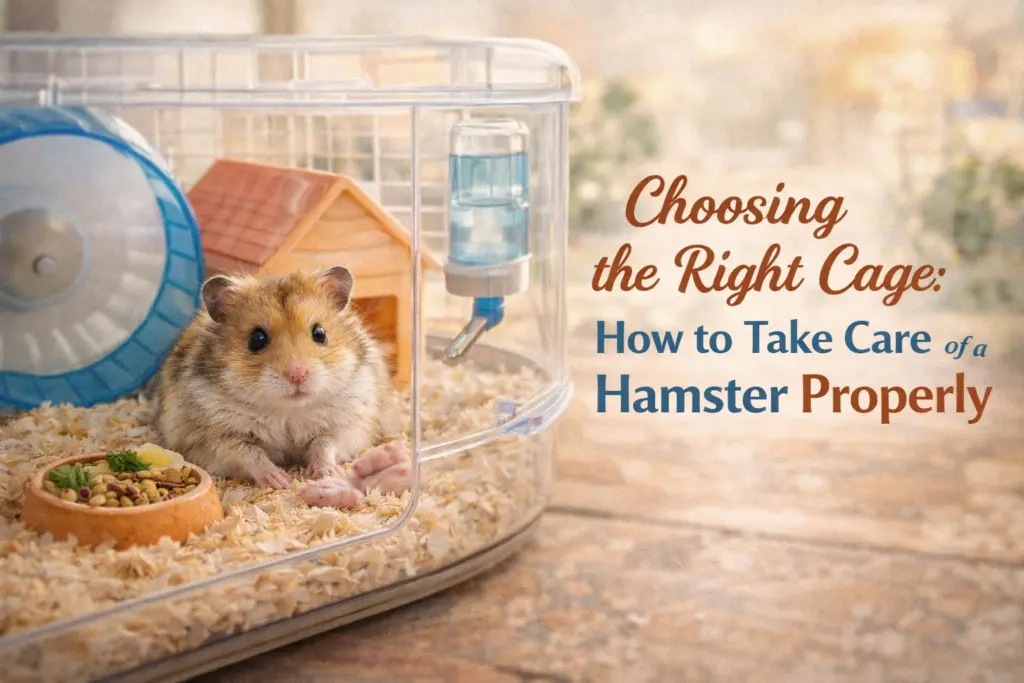
The single most common mistake new hamster owners make is buying a cage that is too small. In the wild, hamsters travel several miles every night in search of food. Trapping them in an undersized cage causes chronic stress, which leads to bar chewing, aggression, repetitive pacing, and serious illness.
2026 Minimum Cage Size Standards
- Syrian hamsters: 600–800+ square inches of unbroken floor space
- Dwarf hamsters: 450–600+ square inches
Floor area matters far more than height. Do not count multi-level platforms toward the minimum floor space — your hamster needs continuous ground-level room to roam.
What Your Cage Must Have
- Solid base — no wire flooring (causes foot injuries called bumblefoot)
- Secure, escape-proof design (hamsters are talented escape artists)
- Proper ventilation to prevent ammonia and odor buildup
- Enough room for a wheel, hideout, sand bath, food station, and enrichment items
- Bar spacing no wider than ½ inch for Syrians and ¼ inch for dwarf hamsters
For a detailed breakdown of cage types, brands, and setup photos, see our Hamster Cage Guide: Sizes, Types, Setup & How to Choose the Best One.
2. Safe and Comfortable Bedding for Hamsters

Hamsters are burrowing animals by instinct. They dig complex tunnel systems, build sleeping chambers, and store food underground. The right bedding supports all of that natural behavior while protecting their respiratory health.
Bedding to Avoid Completely
- Cedar shavings — aromatic oils damage hamster lungs and skin
- Pine shavings — same chemical irritants as cedar
- Dusty or scented bedding — respiratory irritant even in small amounts
- Fluffy cotton “fluff” bedding — poses serious risk of ingestion, intestinal blockage, and limb strangulation (RSPCA strongly advises against this)
- Corncob bedding — digestive risk if ingested
Best Bedding Choices in 2026
- Paper-based bedding (e.g., Carefresh, Kaytee Clean & Cozy) — soft, dust-free, excellent for burrowing
- Aspen wood shavings — safe, low odor, burrow-supportive
- Recycled paper bedding — eco-friendly and comfortable
- Unscented toilet paper / paper towels — safe for nesting material on a temporary basis
Depth Rule: Provide a minimum of 6 inches of bedding. Studies show hamsters with deep burrowing space show significantly fewer stress behaviors like bar biting and repetitive pacing. Some owners provide 8–12 inches in part of the enclosure to allow full underground chamber building.
For a complete comparison of brands, safety ratings, and what to look for, visit our guide: Hamster Bedding: How to Choose the Best Bedding for Your Hamster.
3. Feeding Your Hamster: What to Give and What to Avoid
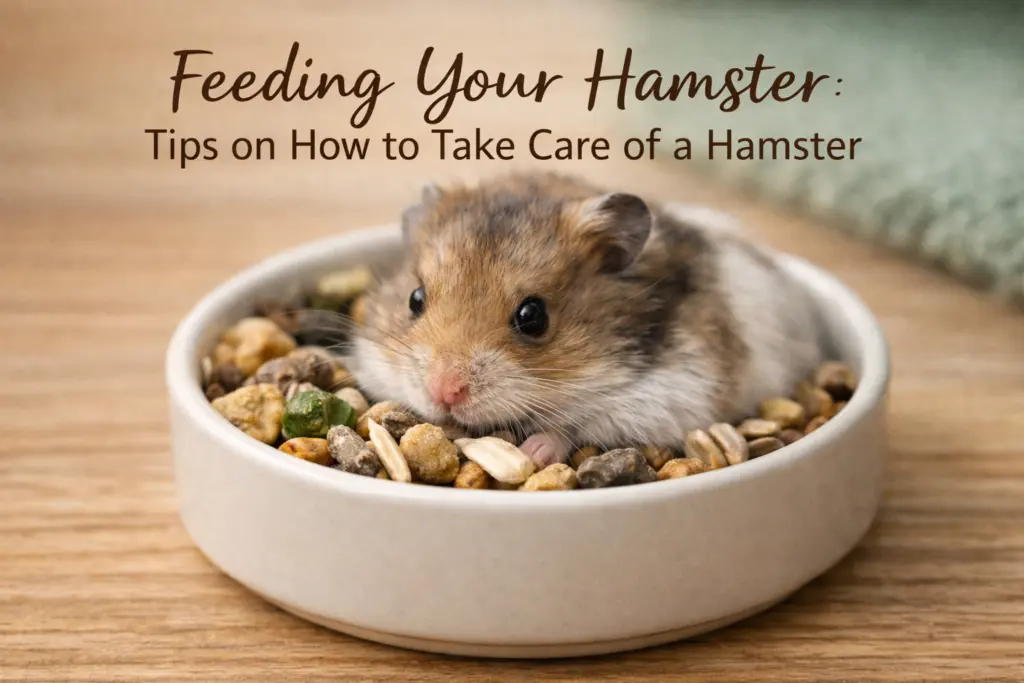
A seed-only diet is one of the most common and damaging mistakes in hamster care. Seeds are high in fat and nutritionally incomplete. Your hamster will selectively eat the tasty seeds and leave behind the healthy pellets — the same way a child would eat candy over vegetables.
The Right Daily Diet
Primary food (daily): High-quality commercial hamster pellets or lab blocks with 15–25% protein content. Pellets alone — not mixed seed bags — are the gold standard recommended by exotic vets.
Fresh vegetables (3–4 times per week):
- Carrot (small amounts only — high in sugar)
- Broccoli
- Cucumber
- Bell pepper
- Spinach
- Cauliflower
Occasional treats (1–2 times per week):
- Small apple slice (seedless)
- Tiny piece of banana (see our full banana safety guide on Can Hamsters Eat Bananas?)
- Dried fruit (in very small amounts)
For specific fruit safety questions, see: Can Hamsters Eat Strawberries? Safe Amounts, Risks & Breed Guide
Never feed these: Chocolate, onions, garlic, sugary candy, citrus fruits, processed human foods, raw beans, or alcohol.
Important for dwarf hamsters: Dwarf species are especially prone to diabetes. Sugar intake — even from fruit — must be kept to an absolute minimum for them.
Always remove uneaten fresh food within 24 hours to prevent spoilage. Hamsters hoard food in their bedding, so check for hidden stashes during spot cleans. For a comprehensive safe and unsafe food list, read our Hamster and Food: Feeding Guide With Safe & Unsafe Food.
4. Fresh Water: Bottle or Bowl?

Your hamster needs access to clean, fresh water at all times. Even a few hours without water can cause serious health problems in a small animal.
Water Bottle vs. Bowl
Water bottles are the preferred option for most hamster owners because they stay cleaner, resist contamination from bedding and feces, and cannot tip over and soak the cage. However, some hamsters prefer to drink from shallow bowls — if you use a bowl, choose a heavy ceramic one that cannot be knocked over.
Daily Water Checklist
- Change water every 24 hours — never let it sit longer
- Check bottle nozzle daily for clogs, mineral deposits, and air bubbles
- Scrub the nozzle with a bottle brush weekly to prevent bacterial buildup
- Never add flavorings, vitamins, or sugar to water without vet guidance
- Deep clean bottle and bowl with mild soap + bleach rinse weekly (rinse thoroughly)
For a full breakdown of bottle types, sizes, and which ones actually work, read The Ultimate Guide to Choosing a Hamster Water Bottle.
5. Exercise Wheels: Why Hamsters Cannot Live Without One

In the wild, hamsters run several miles per night foraging for food. In captivity, a running wheel is the primary substitute for that natural behavior. Without a proper wheel, hamsters develop obsessive behaviors, stress chewing, weight gain, and aggression. A wheel is not optional — it is a non-negotiable welfare requirement.
2026 Wheel Size Guidelines (Updated)
- Syrian hamster: Minimum 10–12 inches in diameter
- Dwarf hamster: 8–10 inches in diameter
The size guide from the California Hamster Association recommends that the wheel be large enough so that the hamster’s back stays flat — not arched into a U-shape — while running. A U-shaped back while running indicates the wheel is too small and will cause spinal damage, arthritis, and obesity over time.
Wheel Must-Haves
- Solid running surface — no mesh, bars, or rungs (causes foot and leg injuries)
- Silent or low-noise operation
- Stable base that does not tip during use
- No open spokes that could catch a leg or tail
Regular exercise on a proper wheel supports a healthy weight, reduces stress, improves mental stimulation, and can positively influence longevity. Learn more about how exercise relates to your hamster’s long-term health in our guide to Hamster Average Lifespan: Average Age, Data Table & Age Calculator.
For a complete guide on safe wheel options and what to avoid, check out Hamster Treadmill: A Complete Guide to Safe Exercise Wheels and Balls.
6. Temperature, Lighting & Environment

Hamsters are far more sensitive to their environment than most people realize. Getting this wrong can cause serious health problems or even death.
Ideal Temperature Range
Keep your hamster’s room between 65–75°F (18–24°C). This is the sweet spot for normal hamster activity and health.
- Below 60°F (15°C): Can trigger torpor — a dangerous state often mistaken for hibernation. Syrian hamsters are particularly vulnerable. Torpor is not peaceful sleep; it is a survival mechanism that indicates your hamster is dangerously cold.
- Above 80°F (27°C): Significant heat stress risk. Hamsters cannot sweat or pant efficiently, making them highly susceptible to heatstroke.
Cage Placement Rules
- Away from direct sunlight at any time of day
- Away from air conditioning or heating vents (sudden temperature changes cause stress)
- Away from loud speakers, televisions, or high-traffic areas
- Away from other pets like cats and dogs — even their presence near the cage causes chronic stress
- Humidity should stay between 40–70%
For more information about temperature-related behavior including torpor, see: Do Hamsters Hibernate?
7. Handling Your Hamster Gently (And Avoiding Bites)

Hamsters do not bite out of aggression. They bite when they are scared. Understanding this changes everything about how you interact with your hamster.
Why Hamsters Bite
Grabbing from above mimics how a predator would attack. Waking a sleeping hamster causes immediate defensive panic. Sudden movements, loud noises, and unfamiliar smells all trigger a fear response. A frightened hamster bites — and it makes complete sense from their perspective.
How to Build Trust Step by Step
- New hamster at home: Give them 48–72 hours to settle in before attempting any interaction. Place the cage in a calm spot and cover it lightly.
- Start with your scent: Place your hand inside the cage without trying to pick up your hamster. Let them come to you and sniff at their own pace.
- Hand feeding: Offer small treats by hand to build a positive association with you.
- Scooping, not grabbing: Always scoop from underneath with two cupped hands. Never grab from above.
- Respect their schedule: Hamsters are most active in the evening. Attempt handling in the late afternoon or evening — never during daytime sleep.
With patience and a consistent routine, most hamsters become comfortable with gentle handling within 1–3 weeks. For a detailed explanation of bite causes, prevention, and what to do if bitten, read Hamster Biting: Causes, Prevention, and Fixes.
If your hamster is not biting you but is biting and chewing the cage bars, that is a different problem — usually a sign of boredom, stress, or an undersized enclosure. Read our complete guide: Why Is My Hamster Biting the Cage Bars? (7 Real Reasons + Fixes).
Building trust with your hamster takes time, but the results are worth every patient step. If you want a structured day-by-day plan that takes you from a completely untamed hamster to one that is comfortable being held, our dedicated guide covers every stage in detail — including what to do when progress stalls or your hamster regresses. Read the full process here: How to Tame a Hamster: Step-by-Step Guide (2026).
8. Cleaning the Cage — But Not Too Much

Here is something most beginner guides get wrong: over-cleaning is just as harmful as under-cleaning. Hamsters navigate their world almost entirely by smell. Their scent markings tell them where their food is stored, where their nest is, and that they are safe at home. Stripping away all of those scent markers at once causes extreme stress and disorientation.
The Right Cleaning Routine
Every 2–3 days — Spot Cleaning: Remove visibly soiled bedding, droppings, and leftover fresh food. Do not disturb the main burrow or nesting area unless absolutely necessary.
Weekly — Full Clean: Remove all bedding, wash the cage with mild, fragrance-free soap and warm water, rinse completely, and let it dry before adding fresh bedding. Here is the key: save a small handful of the old bedding and mix it into the new. This familiar scent helps your hamster recognize their home immediately and reduces stress significantly.
If you’re unsure about the exact process, follow this detailed step-by-step hamster cage cleaning guide to make sure you do it safely without stressing your hamster.
What to Avoid:
- Scented or antibacterial cleaning sprays — toxic to hamsters
- Cleaning more than once per week (stress-inducing)
- Throwing away all old bedding at once
- Cleaning during the day when your hamster is sleeping
9. Understanding Hamster Behaviour: What Your Hamster Is Telling You
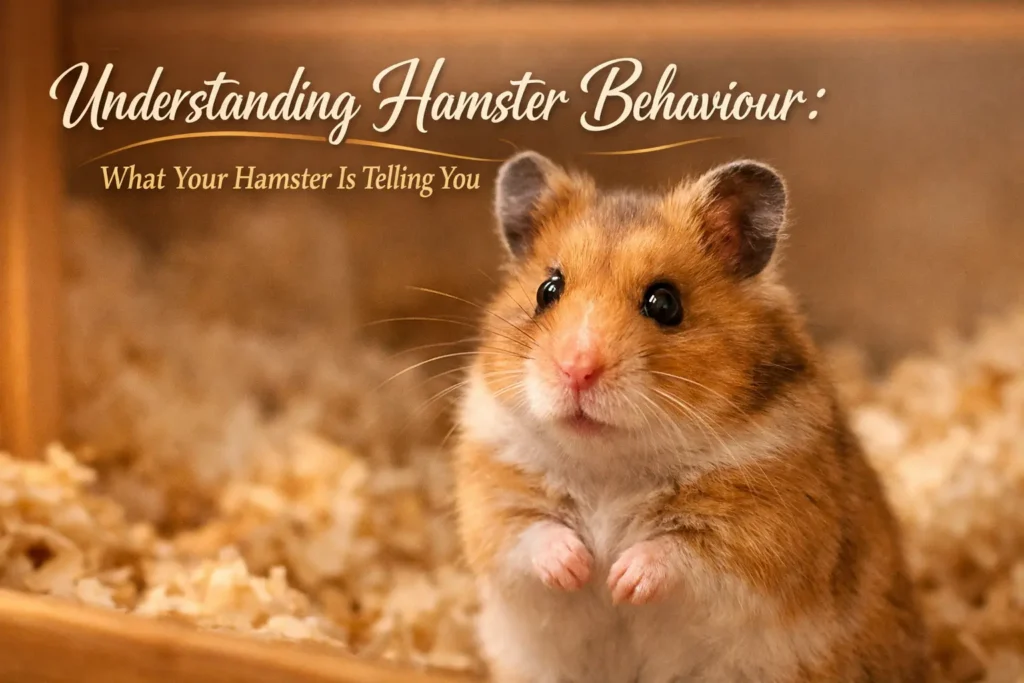
Hamsters cannot speak, but they communicate constantly through their behaviour. Learning to read these signals is one of the most valuable skills you can develop as a hamster owner — it helps you catch problems early, build trust faster, and give your hamster exactly what they need.
Are Hamsters Nocturnal?
Most people assume hamsters sleep all day and party all night. The reality is slightly more nuanced — hamsters are crepuscular, meaning they are naturally most active at dusk and dawn, with activity extending through the night. They sleep heavily during daylight hours as a survival instinct from the wild, where daytime means predators.
What this means for you practically: schedule all handling, feeding fresh vegetables, and cage interaction for late afternoon or evening. Waking a hamster during the day causes genuine stress not just grumpiness and repeated disturbance weakens their immune system over time.
For a full breakdown of hamster sleep cycles, what unusual sleep patterns mean, and how to work with your hamster’s natural schedule rather than against it, read: Are Hamsters Nocturnal? Understanding Your Pet’s Nighttime Behavior.
To understand your hamster’s full communication system — from pouch stuffing to freezing and yawning — read our dedicated guide: Hamster Body Language Guide: What Your Hamster Is Really Telling You.
Why Is My Hamster Biting the Cage Bars?
Bar biting is one of the most misunderstood hamster behaviours. Many owners assume it is a personality quirk or a bid for attention. It is neither. Bar biting is a stereotypy — a repetitive stress behaviour with a direct cause.
The most common triggers are:
- Cage too small — insufficient space to express natural behaviours
- Bedding too shallow — cannot burrow properly
- Not enough enrichment — boredom in a barren environment
- Wanting out — your hamster has learned that bar biting gets a response
Persistent bar biting causes tooth misalignment and, in severe cases, neurological issues from repetitive vibration. The solution is almost always environmental: upgrade the cage size, deepen the bedding, and add enrichment before anything else.
Full causes, fixes, and what to do when the behaviour does not stop: Why Is My Hamster Biting the Cage Bars?
Why Is My Hamster Shaking?
Occasional shaking or trembling in hamsters has several possible causes — and knowing which one applies to your hamster matters enormously.
Common causes include:
- Cold or torpor — if room temperature has dropped below 60°F (15°C), your hamster may be entering a dangerous cold-induced state
- Fear or stress — a hamster that was startled or handled roughly may tremble temporarily
- Old age — mild tremors are common in senior hamsters and are not always a sign of illness
- Neurological issue or serious illness — shaking combined with loss of coordination, refusal to eat, or other symptoms warrants same-day veterinary attention
Never ignore shaking that lasts more than a few minutes or occurs repeatedly. A hamster that is cold needs warmth immediately. A hamster showing neurological signs needs a vet.
Complete guide to every cause and what to do in each case: Why Is My Hamster Shaking? Causes and Solutions
Why Do Hamsters Eat Their Babies?
This is one of the most distressing things a hamster owner can witness — and one of the most commonly searched questions about hamster behaviour. Understanding why it happens is the first step to preventing it.
Mother hamsters may eat their young when they feel the litter is threatened, when they are severely stressed by human interference too soon after birth, when they cannot produce enough milk to sustain the litter, or when a pup is born ill or underdeveloped and she instinctively culls it.
The single most important rule after a hamster gives birth: do not touch the pups or disturb the nest for at least 14 days. Even your scent on a pup can cause the mother to reject or harm it. Remove the male immediately after mating — he plays no parenting role and his presence stresses the mother.
Everything you need to know about hamster pregnancy, safe breeding practices, and preventing infanticide: Why Do Hamsters Eat Their Babies? Causes and Prevention
The pattern across all hamster behaviour problems is the same: something in the environment is not meeting your hamster’s needs. Before assuming a behaviour is random or a personality flaw, ask what your hamster might be reacting to — and check the basics first.
10. Understanding a Hamster’s Sleep Schedule

Hamsters are crepuscular to nocturnal animals — most active from dusk through the night and into early morning. They sleep heavily during the day. Disturbing this schedule consistently leads to chronic stress, a weakened immune system, increased aggression, and withdrawal from interaction.
The best times to interact with your hamster are in the late afternoon or evening when they are naturally waking up and becoming active. If your hamster is in their nest and you need to clean or check on them during the day, speak softly before reaching in to give them a moment to wake up gently rather than being startled.
For a full breakdown of hamster sleep behavior, cycles, and what unusual sleep patterns may indicate, read Hamsters Sleep: Understanding Your Tiny Friend’s Sleep Patterns.
11. Watching for Signs of Illness
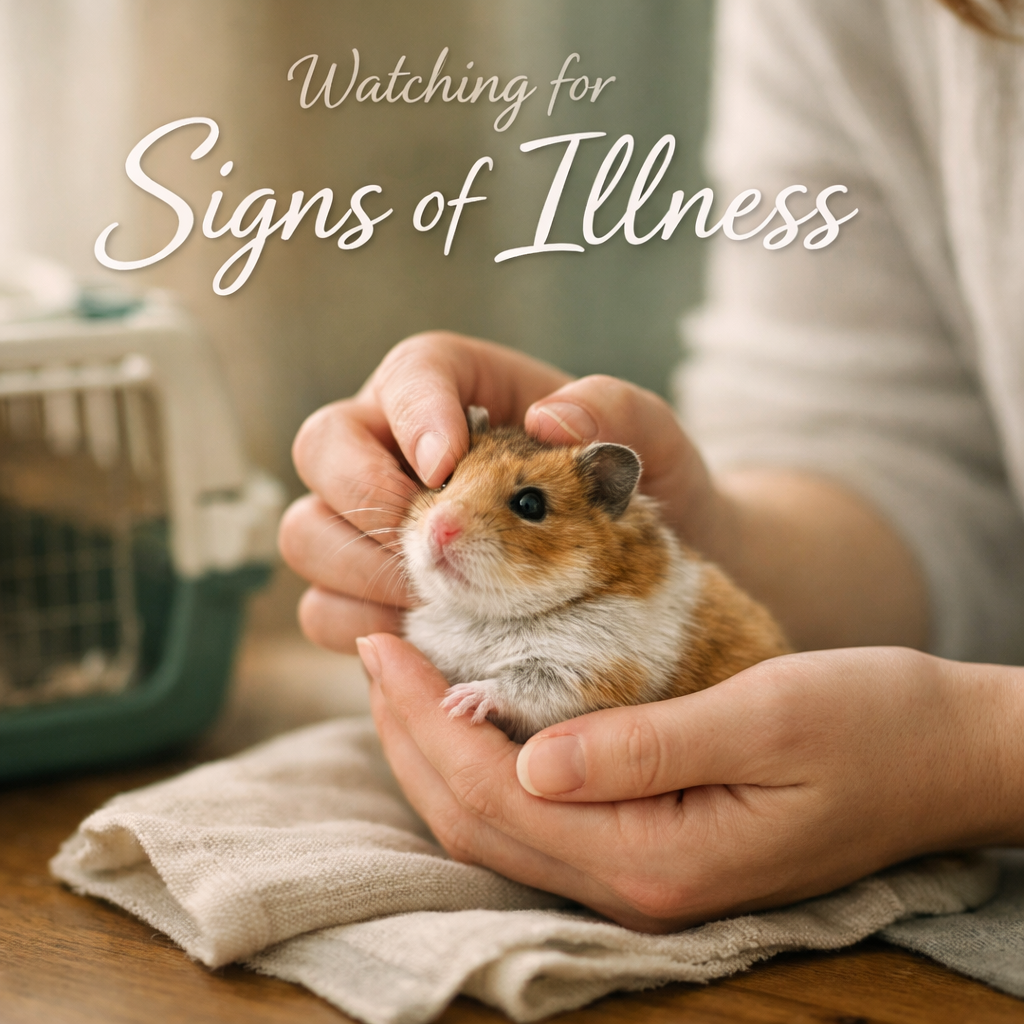
Hamsters are prey animals. In the wild, showing weakness attracts predators — so they instinctively hide illness until it is quite advanced. By the time you notice something is wrong, your hamster may have been sick for days. Regular observation is your best early-warning system.
Warning Signs to Watch For
- Sudden weight loss: If your hamster looks visibly thinner, something is wrong. Weigh them weekly on a kitchen scale if possible.
- Wet tail: A wet, soiled backside combined with diarrhea is an emergency. Wet tail (proliferative ileitis) can be fatal within 24–48 hours without veterinary treatment. Do not wait. Read more in our Hamster Wet Tail: Symptoms, Causes, Treatment, and Survival Guide.
- Loss of appetite or thirst: Missing meals or water for more than 24 hours is a red flag. Read our complete guide: Hamster Not Eating: 10 Causes & What to Do
- Lethargy or unusual stillness: A healthy hamster is curious and active during their awake hours. Unusual stillness or weakness needs investigation.
- Shaking or trembling: Can indicate cold, extreme stress, or neurological issues. See Why Is My Hamster Shaking? Causes and Solutions.
- Fur loss or bald patches: May indicate mites, ringworm, hormonal issues, or nutritional deficiency. See Bald Hamster: Causes, Treatment, and When to Worry.
- Runny nose or labored breathing: Hamsters can catch respiratory infections — and can even contract colds from humans. Avoid handling when you are sick.
- Dull eyes or matted fur: General signs of poor health that warrant a vet visit.
- Sudden behavior change: Hiding more than usual, unusual aggression, or stopping use of the wheel.
- Sudden behavior change: Hiding more than usual, unusual aggression, or stopping use of the wheel.
- If you notice multiple warning signs appearing together — lethargy, weight loss, and withdrawal all at once — your hamster may be in serious decline. Learn to recognize the critical difference between illness and end-of-life signs in our complete guide: Signs Hamster Is Dying: 10 Clear Warnings Every Owner Must Know.
When in doubt, book a vet appointment. Exotic vets who specialize in small animals are the right choice — a general vet may not have the specific training needed for hamster health assessment. For a full overview of common hamster diseases, see Hamster Diseases: What Every Pet Owner Should Know.
12. Tracking Growth, Life Stages, Breeding and Lifespan

Hamsters move through life stages quickly. Understanding what is normal at each stage helps you provide the right care and spot problems early.
Monitoring Weight: Weigh your hamster weekly using a small kitchen scale. Sudden drops in weight are often the first sign of illness, even before behavioral changes appear. Breed-specific weight ranges and a tracking calculator are available in our Hamster Weight Chart by Breed and Age.
Life Stages: Hamsters go from helpless newborns to sexually mature juveniles in just 4–6 weeks, reach adulthood around 3–4 months, and enter their senior phase from around 18 months onward. Diet, enrichment, and handling needs change at each stage. Full details are in our Hamster Life Stages: Baby to Senior guide.
Expected Lifespan: Most pet hamsters live between 2–3 years, though some individual hamsters — particularly Roborovski dwarfs — can reach 3.5 years with exceptional care. Syrian hamsters typically average 2–2.5 years. For breed-specific data and a lifespan calculator, see Hamster Average Lifespan: Average Age, Data Table & Age Calculator.
Breeding & Pregnancy: Hamsters reach sexual maturity as early as 4–6 weeks old — which means unplanned litters can happen faster than most owners expect. If you are considering breeding or want to understand what pregnancy looks like, what to prepare, and how to keep mother and pups safe, read our Hamster Pregnancy and Breeding: Complete Guide 2026.
13. Cost of Owning a Hamster in 2026

Hamsters have a reputation as cheap pets. That is partially true, but only if you do it properly. Skimping on cage size or bedding to save money is false economy — it leads to vet bills and a shorter, unhappier life for your pet.
Estimated Setup Costs
- Cage: $50–$150 (go for the largest you can afford)
- Exercise wheel: $15–$35
- Bedding (initial): $20–$25
- Hideouts, toys, enrichment items: $20–$40
- Food supply (starter): $15–$20
- Water bottle: $8–$15
- Estimated startup total: $130–$285
Ongoing Monthly Costs
- Bedding replacement: $15–$25
- Food: $10–$15
- Fresh vegetables: $5–$10
- Occasional supplies/replacements: $5–$10
- Average monthly total: $35–$60
Annual exotic vet check: $50–$150 depending on location. Budget for this — it is worth it for early detection of health issues.
14. Choosing the Right Hamster Breed for Beginners

Not all hamsters are equally suited to first-time owners. Choosing the right species makes a significant difference in your experience and your hamster’s wellbeing.
Best Breeds for Beginners
Syrian Hamster (Golden / Teddy Bear Hamster): The top recommendation for beginners. Syrians are larger (5–7 inches), making them easier to handle without accidentally dropping them. They have calmer personalities than dwarf species and become comfortable with regular handling more quickly. They must always be housed alone — Syrians are fiercely territorial and will fight to the death if housed together regardless of gender. Learn more about this breed: What Is a Teddy Bear Hamster?
Winter White Dwarf Hamster: The most handleable of the dwarf species. They can sometimes live in same-sex pairs if introduced young, making them interesting to watch socially. However, they are fast and require more patience to tame than Syrians.
Roborovski Dwarf Hamster: The smallest and fastest hamster species. Entertaining to watch but very difficult to handle — not recommended for beginners or young children. Best enjoyed as a “watch, don’t hold” pet.
Learn more about Roborovski hamsters read Roborovski Hamster: Complete Care Guide for Beginners & Owners
Campbell’s Dwarf and Chinese Hamster: Both require more experience and patience. Better suited to owners who have already kept a hamster before.
For a broader comparison of all popular species, read 5 Most Popular Pet Hamsters.
Once you have chosen your breed, the next fun step is picking the perfect name. Browse 200+ Hamster Names: Cute, Male & Female Ideas for inspiration.
15. Hamster Enrichment: The 2026 Essential Guide

This is a section that older hamster care guides often skip — but it is becoming increasingly recognized as essential for hamster welfare. Enrichment means providing your hamster with mental stimulation and opportunities to express natural behaviors. A hamster with a large cage but nothing to do in it will still show stress behaviors.
Must-Have Enrichment Items
- Running wheel — non-negotiable (covered in detail above)
- Sand bath — a container of reptile-safe or children’s play sand (baked to sterilize) lets your hamster self-groom naturally; do not use dust
- Hideout / nest box — your hamster needs a dark, enclosed space to sleep securely; ceramic or wooden hides are best
- Chew toys — hamster teeth grow continuously throughout their life; wooden chews, untreated branches, and rodent-safe chew sticks prevent overgrowth
- Foraging opportunities — scatter feed part of their daily food ration through the bedding to encourage natural foraging behavior
- Tunnels — plastic or cardboard tunnels satisfy burrowing instincts above ground; clean weekly
- Climbing structures — small wooden platforms or cork pieces add vertical interest
For a complete breakdown of every enrichment method, why each one matters, and how to set them up correctly, read our full guide: Hamster Enrichment: 10 Ways to Keep Your Hamster Happy and Mentally Stimulated
Enrichment Rotation
Regularly rotating toys and rearranging cage elements (while keeping the nesting area undisturbed) prevents boredom. New objects with novel smells are particularly stimulating for hamsters, who rely heavily on their sense of smell to explore their world.
Choosing the right toys matters as much as having them — not every toy sold for hamsters is safe or effective. For a vetted list of the best options across every category, see: 5 Top Hamster Toys for Mental and Physical Stimulation
16. Vet Care: When and How Often

Many hamster owners never take their pet to a vet. This is a mistake. Early vet care catches problems before they become emergencies.
When to See a Vet
- Within the first week of bringing your hamster home — a baseline health check
- Once a year for a wellness exam with an exotic or small-animal vet
- Immediately if you notice: wet tail, significant weight loss, labored breathing, blood in stool/urine, overgrown teeth, or any rapidly worsening symptom
Important: Always seek a vet who has experience with exotic or pocket pets. General practice vets are not always trained in hamster-specific conditions. Ask specifically whether the clinic sees hamsters before booking.
Hamsters Can Catch Colds From Humans
This surprises many people, but hamsters are susceptible to human respiratory viruses. If you have a cold, flu, or respiratory illness, avoid handling your hamster until you recover. Wash your hands thoroughly before and after every interaction as standard practice.
17. Comparing Hamsters With Other Small Pets
If you are still deciding whether a hamster is right for you, it helps to see how they compare to other popular small pet options.
Hamster vs. Guinea Pig: Guinea pigs are significantly more social animals — they thrive in pairs or groups and become noticeably depressed when kept alone. They require larger cages, more fresh vegetables, constant hay, and considerably more daily interaction. Hamsters are solitary, need less space, and are more independent. For a full comparison: Hamster vs Guinea Pig: Which Pet Is Right for You?
Hamster vs. Gerbil: Gerbils are social, curious, and diurnal (active during the day), making them easier to observe. They love companionship and should be kept in same-sex pairs. Hamsters are solitary and nocturnal. If you want a pet that is active while you are awake, a gerbil might suit you better. Full comparison: Gerbil vs Hamster: Which Small Pet Is Right for You?
Still deciding? If you are a busy person looking for the most manageable small pet, see: Top 5 Small Pets for Busy People: Easy-Care Companions
For a wider comparison of beginner-friendly pets, see Top 10 Low Maintenance Pets for Busy People and Beginners.
FAQs About Hamster Care (2026)
These are the most commonly asked questions about hamster care.
1. Are hamster balls safe?
This is increasingly debated among hamster welfare experts. The RSPCA advises against hamster balls because they restrict the hamster’s senses, provide no access to food or water, cause disorientation, and can roll down stairs. A secure playpen area is a far safer alternative for out-of-cage time.
2. How do I know if my hamster is happy?
A happy hamster is active during their awake hours, uses their wheel regularly, explores their cage with curiosity, has bright eyes, a full rounded body, and clean fur. They approach your hand rather than fleeing, and they build and maintain an organized nest. Signs of unhappiness include bar biting, repetitive pacing, hiding constantly, and refusing food.
3. What is bar biting in hamsters and how do I stop it?
Bar biting (gnawing on cage bars repeatedly) is a stereotypy — a repetitive behavior caused by stress, boredom, or insufficient space. It can cause tooth misalignment and in severe cases neurological damage from vibration. The primary solution is upgrading to a larger cage with more enrichment and deeper bedding. It is not a personality quirk — it is a welfare signal.
4. Can hamsters recognize their owners?
Yes. Hamsters have excellent memory for scents and voices. With consistent gentle handling, your hamster will learn to recognize you and associate your smell with safety and treats. This recognition builds over weeks and is one of the most rewarding aspects of hamster ownership.
5. Is a hamster a good pet for beginners?
Yes — with realistic expectations and the right setup. Hamsters are manageable for beginners who are willing to invest in a proper cage, bedding, and a consistent daily routine. They are not zero-effort pets, but they are far less demanding than dogs or cats.
6. How do you take care of a hamster for beginners?
Provide fresh food and water daily, maintain a proper cage with deep bedding, give them a correctly sized wheel, handle them gently during evening hours, and clean the cage weekly. These five habits cover 90% of basic hamster welfare.
7. Do hamsters smell?
A hamster itself does not have a strong odor. The cage will develop a smell if not cleaned regularly. Spot clean every 2–3 days and do a full bedding change weekly. Using high-quality absorbent bedding and keeping the cage well-ventilated minimizes smell significantly.
8. How long do hamsters live?
Most pet hamsters live between 2–3 years with good care. Syrian hamsters average 2–2.5 years. Roborovski dwarfs sometimes reach 3–3.5 years. Lifespan varies by breed, genetics, diet, and care quality.
9. Can hamsters be left alone for a few days?
Only for 1–2 days with adequate food and water secured in advance. For longer absences, arrange for someone to check on them daily. Hamsters should never be left without fresh water for more than 24 hours.
10. Why does my hamster bite?
Fear is almost always the cause. Hamsters bite when startled, grabbed from above, woken suddenly, or handled roughly. Build trust gradually with hand feeding and scent familiarization before attempting to pick them up. See Hamster Biting: Causes, Prevention, and Fixes.
11. Why is my hamster not moving?
Check the temperature first. If the room is below 60°F (15°C), your hamster may be in torpor — a dangerous cold-induced state. Warm the room gradually and contact a vet if they do not recover within a few hours. Other causes include illness, injury, or old age. Never assume a still hamster is simply sleeping without checking.
12. Do hamsters need a bath?
Never give a hamster a water bath — they are prone to becoming dangerously chilled and it causes extreme stress. Hamsters are meticulous self-groomers. A sand bath (a container of appropriate sand) is the only supplemental hygiene tool they need, and only if they enjoy it.
13. My hamster is running on the wheel all night — is that normal?
Yes, this is completely normal. Hamsters can run 5–10 kilometers per night on their wheel. This is a sign of good health and a properly sized, functioning wheel. If your hamster suddenly stops using their wheel, that is when you should be concerned.
14. Can hamsters get sick from humans?
Yes. Hamsters are susceptible to human respiratory viruses including common colds. Avoid handling your hamster when you are ill and always wash your hands before and after handling.
15. What is the minimum cage size for a hamster in 2026?
Exotic veterinarians and welfare organizations recommend a minimum of 450–600 square inches of unbroken floor space for dwarf hamsters and 600–800+ square inches for Syrian hamsters. Many older pet store cages fall well below these minimums. Bigger is always better.
16. How deep should hamster bedding be?
A minimum of 6 inches throughout the enclosure. Many welfare-conscious owners provide 8–12 inches in at least one section of the cage to allow full tunnel and burrow construction. Deep bedding is directly linked to reduced stress behaviors like bar biting.
17. Is 2 hamsters better than 1?
For Syrian hamsters, absolutely not. They are solitary by nature and will fight — sometimes fatally — if housed together. Some dwarf species (particularly Winter Whites and Campbell’s) can sometimes coexist in same-sex pairs if introduced at a young age, but this requires close monitoring and two of everything (wheels, hides, food stations). When in doubt, one hamster per cage.
18. What is the best cage for a hamster in 2026?
Bin cages (modified large plastic storage containers), IKEA Detolf display cases with mesh lids, and large commercial enclosures like the Niteangel series are all popular among welfare-focused owners in 2026. The priority is always unbroken floor space over aesthetics. See our Hamster Cage Guide for detailed recommendations.
Final Thoughts: Proper Hamster Care Is Structured, Not Complicated
Taking care of a hamster well does not require expensive equipment or hours of daily effort. It requires the right setup from the start and a consistent routine.
Get the cage size right. Provide deep bedding. Feed a complete diet. Give them a proper wheel. Maintain a regular cleaning routine without over-cleaning. Respect their sleep schedule. Watch for illness signs. And give them your patient, gentle attention in the evenings when they are naturally awake and curious.
Do those things consistently, and your hamster will live a full, active, healthy life. They will become comfortable with you, show their personality, and give you years of small but genuine companionship.
If you have questions about any specific aspect of hamster care, browse the guides linked throughout this article — each one covers its topic in much greater depth than a single overview can provide.
This guide was written with reference to current welfare standards from exotic veterinarians, the California Hamster Association, RSPCA guidelines, and PetMD’s 2025–2026 veterinary resources.