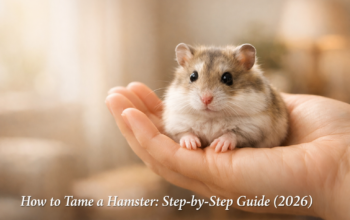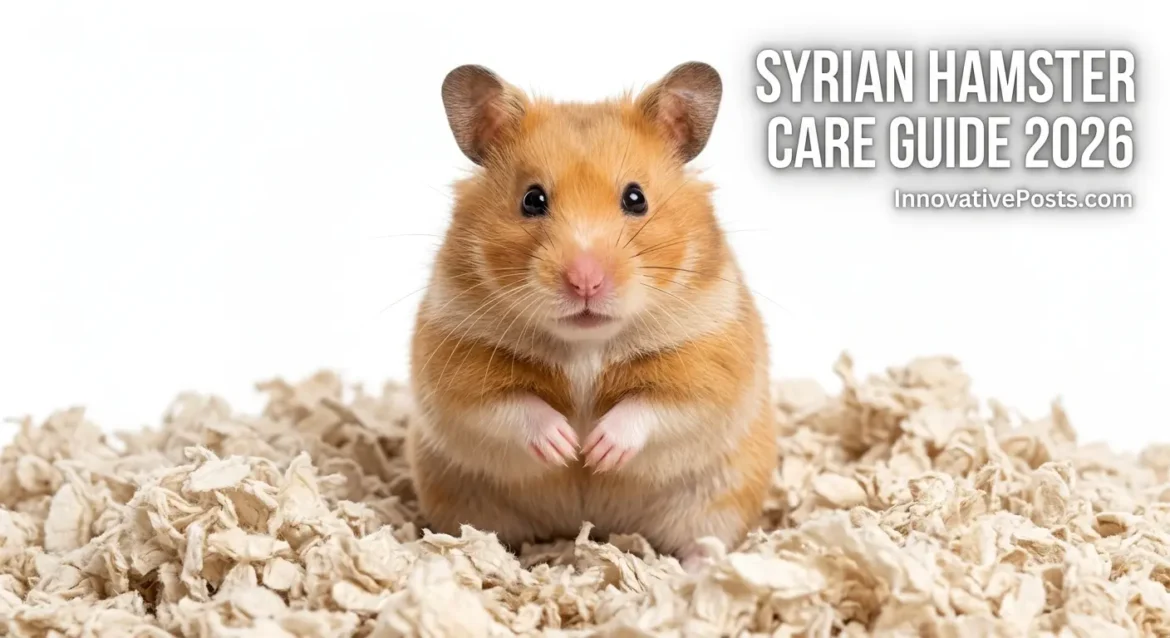
Syrian Hamster — Species Overview and Fast Facts
The Syrian hamster (Mesocricetus auratus) originates from the arid steppes of northern Syria and southern Turkey. Following scientist Israel Aharoni’s collection of a mother hamster and her pups near Aleppo in 1930, their offspring were bred, used in laboratories, and eventually became the pet hamsters sold worldwide today. This means every pet Syrian hamster alive today is descended from that single 1930 litter — a remarkable and somewhat sobering fact about the genetic bottleneck of the species.
Wild Mesocricetus auratus is currently listed by the IUCN as Endangered, due to habitat loss and agricultural pressure in its native range. In the wild, Syrian hamsters live completely solitary lives — they are highly territorial, scent-marking their home ranges with glands found on their flanks, and each hamster travels as much as 8 miles (12.9 km) per evening to find and cache food.

Unique Biology Every Owner Must Understand
Syrian hamsters have several biological features that directly affect how you care for them — and which explain behaviours that often confuse new owners.
Flank Glands — Not a Disease
One of the most common concerns new Syrian hamster owners bring to veterinarians is the discovery of two dark spots on their hamster’s hips — one on each side. These are paired glands in the skin over the flanks, appearing as dark spots within the hair coat. They are much more obvious in males than in females, and hamsters use these glands to mark their territory.
Syrian hamsters possess paired flank organs in the costovertebral area that are androgen dependent and consist of sebaceous glands, pigmented cells, and terminal hairs. They are larger and heavily pigmented in males. When your hamster rubs its flanks against cage accessories, furniture, or even your hand, it is performing natural territorial scent-marking behaviour. This is not a skin condition, not a wound, and requires no treatment. However, if the flank gland area becomes inflamed, raised, or discharges fluid — that does warrant veterinary attention as a gland infection.
Cheek Pouches
All Syrian hamsters possess enormous cheek pouches that open inside the lips, extend well back of the shoulders, and when filled with food more than double the width of the animal’s head and shoulders. A hamster with fully stuffed cheek pouches looks alarming to new owners — but this is completely normal foraging behaviour. The pouches are used to transport food back to a hoard cache in the nest area.
The one cheek pouch concern to watch for is impaction — when food, nesting material, or other debris becomes stuck in the pouch and cannot be naturally expelled. Signs include a permanently puffed cheek that does not deflate after 24 hours, pawing at the face, and reluctance to eat. This requires immediate veterinary attention.
Torpor — Not Hibernation
Syrian hamsters do not truly hibernate, but they can enter a state called torpor when room temperatures drop below 60°F (15°C). A hamster in torpor can appear deceased, as they are cold and curled into a ball. Unlike a deceased hamster, a hamster in torpor will typically be found in their nest. Other signifiers of torpor include their heartbeat dropping to three beats per minute and breathing once every one to two minutes.
Torpor is dangerous — not a natural rest state. It depletes fat reserves rapidly and can cause organ damage in prolonged cases. If you find your Syrian hamster unresponsive, check the room temperature immediately. Warm the room gradually to 68–72°F and keep the hamster in a warm, quiet location. If it does not begin to stir within 1–2 hours of warming, see a vet immediately.
Syrian Hamster Coat Types and Colours
One of the things that makes Syrian hamsters so visually diverse is the wide variety of coat lengths, textures, colours, and patterns that have developed through selective breeding. Understanding coat types matters for care — long-haired varieties need additional grooming attention that short-haired types do not.
Short-Haired (Standard)
The classic Syrian hamster coat. Dense, smooth, and close-lying. Lowest maintenance of all types — self-grooming is entirely sufficient. Best for beginners.
Long-Haired (Teddy Bear)
Males develop flowing coats of 3–4cm. Requires weekly gentle brushing with a soft toothbrush to prevent matting. Particularly beautiful but higher maintenance. Females carry shorter long coats.
Satin Coat
A gene mutation that produces a high-gloss, almost wet-looking sheen on the fur. Can be combined with any length. Satin-to-satin breeding is discouraged — can produce thin, sparse coats in offspring.
Rex Coat
Wavy or curly fur caused by a gene mutation affecting hair structure. Whiskers are also curly. Coat feels softer and less dense than standard. Requires occasional gentle brushing to prevent knots.
Dominant Spot
White body with patches of colour. The dominant spot gene in its homozygous form causes serious health issues — ethical breeders avoid breeding two dominant-spot hamsters together.
White (Recessive Gene)
Pure white coat caused by a recessive gene. Can be associated with vision problems in some lines. Beige and white are some of the rarest Syrian hamster colours, both brought on by recessive genes.
Syrian hamsters’ coats can slightly change colour, typically brought on by old age, but seasonal changes can also be a factor. The fading of coat colour accompanied by excessive hair loss and bald patches requires vet attention — this could indicate an underlying hormonal or health condition rather than simple aging.
Male vs Female Syrian Hamster — Key Differences
The sex of your Syrian hamster affects several aspects of its behaviour, temperament, and physical appearance. Understanding the differences helps you choose correctly and interpret your hamster’s behaviour accurately.
Male Syrian Hamster
- Generally calmer, easier to handle
- More prominent flank gland spots
- Noticeably large testes visible from behind
- Larger adrenal glands — higher stress hormones
- Tends to be slightly smaller than females
- Less territorial in behaviour overall
- Long-haired males develop fuller coats
Female Syrian Hamster
- Generally more active and energetic
- Usually heavier and larger than males
- 4-day estrus cycle — can be more territorial
- More likely to bar-chew in smaller enclosures
- Chewy recommends a larger cage minimum for females
- Can be more aggressive toward handling when in heat
- Nipples visible along underside
Both sexes make equally rewarding pets. Male Syrians are often recommended for first-time owners due to their calmer handling temperament. Regardless of sex, Syrian hamsters must always be housed completely alone — introducing two Syrians of any sex or age combination will result in serious fighting and potentially death.
The Right Cage for a Syrian Hamster
Syrian hamsters require more space than any other commonly kept hamster breed. Each hamster travels as much as 8 miles (12.9 km) per evening to find and cache food in the wild. Providing adequate space in captivity is the single most impactful welfare decision you will make.
| Cage Type | Minimum Size | Bedding Depth | Cost | Verdict |
|---|---|---|---|---|
| DIY Bin Cage | 100×50cm / 775 sq in | 8–12 inches | $20–50 | Best Value |
| Niteangel Bigger World | 101×60cm / 940 sq in | 6–8 inches | $200–280 | Best Premium |
| 75-Gal Glass Tank | 122×46cm / 864 sq in | 8–10 inches | $30–150 | Excellent |
| IKEA Detolf | 162×40cm / 950 sq in | 8+ inches | $70–100 | Better for dwarfs |
| Most pet shop cages | ~150–300 sq in | 1–2 inches | $30–80 | Too small |
Female Syrian hamsters are more restless than their male counterparts and may benefit from a larger cage. When in doubt, choose the largest footprint your space and budget allow. For a full breakdown of every cage option, see our Best Hamster Cage Guide 2026.
A minimum of 6 inches (15cm) of burrowing-capable bedding is required throughout the entire cage. Welfare research confirms that Syrian hamsters in cages with adequate bedding depth show significantly fewer stereotypic stress behaviours. Many owners provide 8–10 inches in at least one section to allow full underground chamber construction. Use plain, unscented, dust-free paper bedding. Never use cedar or pine shavings.
What Must Be in Every Syrian Hamster Cage
- Silent running wheel — minimum 10–12 inches diameter, solid surface, no mesh
- At least one enclosed hideout — ceramic or wooden, large enough for the hamster to turn around inside
- Sand bath — ceramic container with dust-free reptile sand, positioned in toilet corner
- Fresh water — bottle preferred; check nozzle daily for clogs
- Safe chew items — apple wood, willow, hazel, or untreated birch
- Cork tunnels or cardboard tubes for above-ground burrowing and exploration
- Scatter-fed daily food — spread through bedding, never in a bowl alone
Syrian Hamster Diet — What to Feed and What to Avoid
Syrian hamsters are omnivores in the wild — eating seeds, grains, roots, insects, and occasional small animals. In captivity, a nutritionally complete diet is essential for long-term health. A seed-only diet is one of the most common and most damaging mistakes in Syrian hamster care — seeds are high in fat and allow selective eating that produces nutritional deficiencies over time.
| Food Category | Examples | Frequency | Notes |
|---|---|---|---|
| Pellets / Lab blocks | Oxbow Hamster, Supreme Science | Daily — main diet | 15–25% protein; no selective eating |
| Fresh vegetables | Broccoli, cucumber, bell pepper, courgette | 3–4× per week | Small portions; remove uneaten food in 24hrs |
| Leafy greens | Spinach, kale, romaine | 2–3× per week | Rotate variety; avoid iceberg lettuce |
| Protein sources | Cooked plain chicken, mealworm, boiled egg | 1–2× per week | Especially important for pregnant and young hamsters |
| Fruit | Small apple slice, blueberry, banana piece | 1× per week max | High sugar — strict moderation. See our Banana Guide |
| Dried herbs/flowers | Chamomile, rose petals, dandelion | Several times weekly | Excellent enrichment; scatter in bedding |
- Chocolate, candy, or any sugary human treats — toxic and cause dangerous blood sugar spikes
- Onions, garlic, and chives — can cause haemolytic anaemia
- Citrus fruits — the acidity causes digestive upset and mouth sores
- Raw beans or raw potatoes — contain compounds toxic to hamsters
- Almonds — contain trace cyanogenic compounds
- Alcohol or caffeinated products — toxic even in trace amounts
- Sticky or sugary foods — can impact cheek pouches, causing abscesses
For a comprehensive food safety list including all fruits and vegetables, see our Complete Hamster Feeding Guide. For specific safe foods, see our guides on carrots and strawberries.
Understanding Syrian Hamster Behaviour
Syrian hamsters communicate entirely through body language, scent, and behaviour. Understanding what your hamster is telling you is one of the most valuable skills you can develop as an owner — it lets you identify problems early and build genuine trust.
Natural Behaviours You Will See Daily
| Behaviour | What It Means | Response Needed |
|---|---|---|
| Stuffing cheeks with food | Normal foraging and hoarding instinct | None — completely natural |
| Rubbing flanks on objects | Territory scent-marking using flank glands | None — natural behaviour |
| Stretching and yawning on waking | Healthy, relaxed start to active period | None — sign of contentment |
| Digging extensively in bedding | Burrowing instinct — building chambers | None — ensure bedding is deep enough |
| Carrying nesting material to hide | Nest building — comfort behaviour | Provide paper tissue or hay for nesting |
| Freezing in place, nose twitching | Assessing potential threat via scent | Stay still, speak softly |
| Bar chewing or cage climbing | Stress signal — cage too small or understimulating | Upgrade cage size immediately |
| Teeth chattering or hissing | Active warning — back off immediately | End interaction, give space |
For a complete body language reference including all stress signs, see our Hamster Stress Signs Guide.
How to Handle and Tame a Syrian Hamster
Syrian hamsters are widely considered the most handleable hamster species — but this gentleness is earned through patient, consistent taming, not assumed from day one. A newly purchased Syrian hamster is a stressed, disoriented animal that needs time before any handling is appropriate.
- 1First 48–72 hours: no interaction. Place the cage in a quiet room. Talk softly near the cage but do not open it. Let your hamster map its new environment through smell without the additional stress of human contact.
- 2Days 3–7: hand presence only. During the hamster’s active period (evening), place your hand flat inside the cage with a small treat on your palm. Do not reach toward the hamster — let it approach you entirely at its own pace.
- 3Days 7–14: hand feeding. Once your hamster is consistently taking treats from your hand without retreating, begin gently moving your fingers slowly toward it after it takes the food. This begins associating your smell and movement with positive experiences.
- 4Week 2–3: first scooping. When your hamster regularly climbs onto your hand for treats, begin scooping gently from underneath with both hands. Keep your hands close to the cage floor — never raise a hamster more than 10–15cm above a soft surface.
- 5Ongoing: consistent, calm evening sessions. Handle only during the hamster’s active period. Keep sessions to 10–15 minutes initially. Never wake a sleeping hamster for handling — this triggers a stress response and is the primary cause of hamster bites. Most Syrians become comfortable with regular handling within 2–4 weeks of consistent effort.
- Grabbing from above — mimics a predator attack and almost always causes a bite
- Handling during the day when the hamster is sleeping — causes stress and defensive biting
- Allowing children to handle unsupervised — young children move too quickly and squeeze instinctively when startled
- Handling over hard floors — a dropped hamster falls from the equivalent of several stories relative to its body size
- Using gloves — removes your scent, which is the primary trust-building signal
Common Syrian Hamster Health Conditions
Syrian hamsters are prey animals that instinctively hide illness. Because these signs can progress fast, it is safest to contact your vet promptly if your hamster stops eating, loses weight, develops diarrhea, or seems less active than usual. Here are the eight most common health conditions in Syrian hamsters:
Wet Tail
Bacterial diarrhoea causing severe dehydration. Wet, soiled fur around tail and belly. Emergency — see vet same day. Can be fatal within 24–48 hours untreated. See our Wet Tail Guide.
Respiratory Infection
Sneezing, nasal discharge, laboured breathing. Can progress to pneumonia within days. Requires antibiotic treatment. Hamsters can catch colds from humans — avoid handling when ill. See our Hamster Sneezing Guide.
Dental Disease
Overgrown incisors from insufficient chewing material, or molar spurs causing eating difficulty. Signs: drooling, dropping food, weight loss. Tooth trimming under sedation required.
Hair Loss (Alopecia)
Multiple causes — mites, ringworm, nutritional deficiency, hormonal imbalance. Location of loss helps identify cause. See our full Hamster Losing Hair Guide.
Eye Infection
Discharge, crusty or stuck eyelids, cloudiness, or eye bulging. Ranges from mild conjunctivitis to corneal ulcer to emergency exophthalmia. See our Eye Infection Guide.
Adrenal Tumours
Adult male Syrian hamsters develop large adrenal glands due to enlargement of the zona reticularis. Adrenal tumours are common in Syrians aged 18+ months, causing symmetrical hair loss, weight changes, and lethargy. Vet diagnosis required.
Lymphoma
In older Syrian hamsters, lymphoma is the most frequently observed neoplasm of the haematopoietic system. It is multicentric and commonly affects lymphatic organs. Signs include lumps, weight loss, and lethargy.
Cheek Pouch Impaction
Food or material stuck in the cheek pouch — permanently puffed cheek that does not deflate. Can become abscessed. Never force the pouch — vet gentle manual clearing required under sedation.
- Weigh your hamster on a kitchen scale — sudden loss is the first sign of illness
- Check both eyes — bright and clear with no discharge
- Check the nose — clean and dry, no discharge
- Check the coat — smooth, full, no bald patches
- Check the tail area — should be clean and dry, never wet or matted
- Check teeth — even, not crossed or overly long
- Observe 10 minutes of active behaviour — foraging, exploring, alert
Syrian Hamster Lifespan and Life Stages
Syrian hamsters typically live 2 to 3 years, though some may live up to 4 years with excellent care. Genetics, diet, stress, and environmental factors all play a role in their longevity. Understanding the life stages helps you adjust care appropriately as your hamster ages.
| Life Stage | Age | Key Characteristics | Care Adjustments |
|---|---|---|---|
| Pup / Juvenile | 0–8 weeks | Born blind, weaned at 3–4 weeks, sexually mature at 4–5 weeks | Handle very gently; high protein diet critical |
| Young Adult | 2–6 months | Full energy, highly active, peak territorial instinct | Full enrichment; consistent handling routine |
| Adult | 6–18 months | Settled personality, prime health period | Standard care; annual vet check |
| Senior | 18+ months | Slower, possible coat changes, increased health risk | Softer food, more vet monitoring, gentler handling |
For detailed age tracking, breed-specific weight ranges, and a lifespan calculator, see our Hamster Average Lifespan Guide and Hamster Weight Chart.
Cost of Owning a Syrian Hamster in 2026
In the United States in 2025–2026, the hamster itself commonly costs about $15–$40, while a properly sized enclosure, deep bedding, solid wheel, hideouts, water bottle, food dish, sand bath, chew items, and carrier often bring the startup total to about $150–$350.
| Item | One-Time Cost | Monthly Cost | Notes |
|---|---|---|---|
| Syrian hamster (purchase/adoption) | $15–$40 | — | Reputable breeder or rescue recommended |
| Cage (bin cage or glass tank) | $20–$280 | — | Bin cage = best value; Niteangel = best premium |
| Silent wheel (10–12 inch) | $25–$50 | — | Niteangel or Wodent Wheel recommended |
| Bedding (initial) | $20–$25 | $15–$25 | Paper-based, unscented, dust-free |
| Food (pellets + fresh) | $15–$20 | $10–$20 | Pellets + vegetables + occasional protein |
| Hideouts, sand bath, chew items | $20–$40 | $5–$10 | Replace chew items and cardboard as needed |
| Annual exotic vet check | — | $6–$10/month | A routine exotic pet exam often runs about $70–$120 |
| Emergency fund | — | $10–$15/month | Urgent visits can range from about $150–$400+ before diagnostics or medications |
Frequently Asked Questions (2026)
Final Thoughts: The Syrian Hamster Deserves More Than the Pet Shop Starter Kit
The Syrian hamster is one of the most rewarding small pets available — inquisitive, individual in personality, and capable of building genuine trust with a patient owner. The problem is not the animal; it is the misleading packaging of the pet industry that sells starter kits half the required size, bedding unsuitable for burrowing, and wheels too small for the hamster’s spine.
Once you get the basics right — cage size, bedding depth, correct wheel, solitary housing, and evening handling — Syrian hamster care is genuinely straightforward. The investment of understanding the science and meeting the species-specific needs pays back in a hamster that is visibly active, curious, and engaged with its environment every single evening.
That is what proper hamster care looks like. And now you know exactly how to provide it.
Written by Emily Carter | Updated: April 2026 | InnovativePosts.com
References: Merck Veterinary Manual · Chewy Syrian Hamster Care Sheet (March 2026) · SpectrumCare (March 2026)