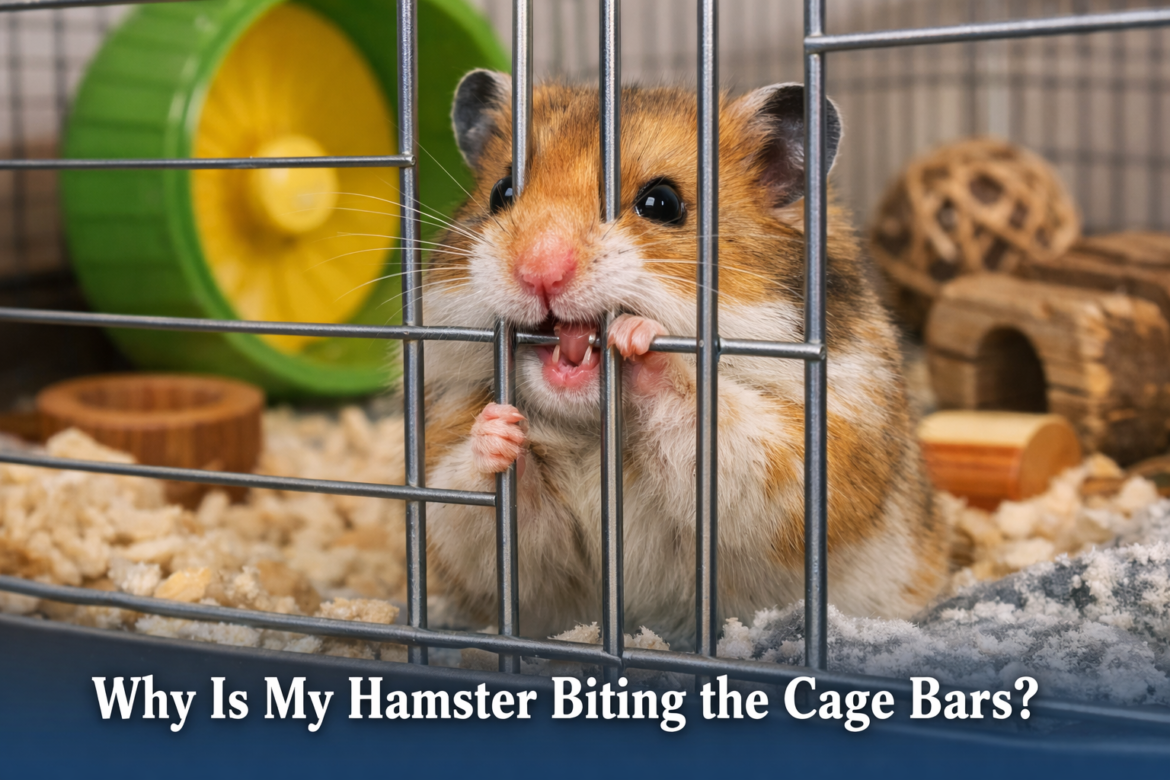
Your hamster is biting the cage bars — again. It’s 2 AM, that metallic clang clang clang sound is driving you crazy, and your little hamster looks stressed.
| Why Is My Hamster Biting the Cage Bars? |
|---|
| Quick Answer: Hamsters bite cage bars mainly because of boredom, a cage that’s too small, stress, hunger, or the natural need to wear down their teeth. The fastest fix is adding a proper exercise wheel and chew toys — but read on to find your hamster’s specific cause. |
Here’s the truth: cage biting is never random. It’s your hamster’s only way of screaming, “Something is wrong!”
The good news? Once you find the real reason, fixing it takes less than a day.
The 7 Real Reasons Your Hamster Bites Cage Bars
1. The Cage Is Too Small (This Is #1 Most Common)
If there’s one reason that explains 70% of cage-biting cases, it’s this: the cage is simply too small.
Hamsters in the wild travel up to 5 miles per night. When they’re stuck in a tiny 10-gallon tank, that energy has nowhere to go — so it turns into destructive behavior.
Minimum cage sizes (non-negotiable):
- Syrian hamsters: 600–800+ sq inches of unbroken floor space
- Dwarf hamsters: 450–600+ sq inches
If your cage is smaller than this, no amount of toys will fully stop the bar-biting. The cage itself is the problem.
Fix: Upgrade to a larger cage. The 40-gallon bin cage setup costs under $30 DIY and is one of the best investments for your hamster’s happiness.
2. Boredom and Zero Enrichment
A bored hamster is a destructive hamster. These animals are incredibly intelligent — without mental stimulation, they develop repetitive behaviors (called “stereotypies”) just like zoo animals in tiny enclosures.
Signs your hamster is bored:
- Pacing the same path repeatedly
- Excessive bar biting, especially in early evening
- Over-grooming or fur loss
Fix it in 24 hours:
- Add a solid-surface exercise wheel (11 inches for Syrians, 8 inches for dwarfs)
- Rotate 2–3 toys every few days so everything feels “new”
- Scatter feed instead of bowl feeding — makes foraging a 30-minute activity
- Add a sand bath — hamsters LOVE digging in play sand
3. Stress and Anxiety
Hamsters are prey animals. Anything that makes them feel unsafe — a nearby cat, a TV that’s too loud, being placed near a window — triggers a stress response.
Common stress triggers owners miss:
- Other pets staring at the cage
- Direct sunlight hitting the cage
- Cage placed too high (hamsters feel exposed)
- Irregular sleep schedule (lights on when hamster wants to sleep)
Fix: Move the cage to a quiet, low-traffic corner of the room. Keep it at ground level or low shelf height. Use a dark hide inside the cage so your hamster always has an “escape.”
4. Teeth That Never Stop Growing
Unlike human teeth, a hamster’s incisors grow continuously — every single day. Gnawing is literally how they survive.
If there’s nothing safe to chew, your hamster will chew whatever is available. Unfortunately, that’s usually the cage bars.
Best chew options:
- Untreated wooden blocks (applewood, willow, birch)
- Cardboard tubes (toilet paper rolls are free and perfect)
- Pumice stones — harder than wood, great for serious chewers
- Hay-based tunnels (chewable AND functional)
What NOT to give: Painted wood, plastic toys marked as “indestructible,” or anything with glue.
5. Hunger or Wrong Diet
This one surprises most owners. If your hamster isn’t getting enough food — or is getting the wrong food — they may bite bars out of pure frustration.
Sugary mixes sold in pet stores often have hamsters eating around the “junk” and missing key nutrients. Your hamster feels full but is actually malnourished.
Signs of diet-related bar biting:
- Biting more right before feeding time
- Empty food bowl every morning
- Selective eating (eating seeds, ignoring pellets)
Fix: Switch to a high-quality lab block or German hamster mix (Hamster Nature, Versele-Laga) as the base. Top up with fresh vegetables 3–4 times a week: cucumber, bell pepper, broccoli, carrot.
6. Wrong Cage Type (Wire Bar Spacing Matters)
Some hamsters bite bars not from boredom — but because their nose fits between the bars and they’re trying to escape. Wire cages with spacing over ½ inch are actually dangerous for dwarf hamsters.
Also, wire flooring (common in cheaper cages) causes “bumblefoot” — a painful paw condition — and hamsters may bite bars to signal pain.
What to look for:
- Bar spacing: max ½ inch for Syrians, ¼ inch for dwarfs
- Solid plastic or glass floor (no wire mesh)
- Good ventilation without drafts
7. Wants Attention (Yes, Really)
Some hamsters learn that bar-biting gets your attention. You walk over, you talk to them, maybe you open the cage. They’ve trained you.
This is more common in hamsters that have daily out-of-cage time and are used to interaction.
Fix: Don’t rush over every time they bite. Instead, establish a consistent playtime schedule — same time every evening. Your hamster will learn to expect it and stop using bars as a doorbell.
Is Cage Biting Dangerous?
Yes, if ignored long-term. Here’s what can happen:
- Dental damage — bar biting can break or misalign incisors, which then can’t be used for eating
- Paw injuries — worn pads and sores from gripping metal bars
- Chronic stress — long-term stress weakens the immune system and shortens hamster lifespan
If your hamster’s teeth look uneven, crossed, or overgrown, see a small animal vet immediately.
Step-by-Step: How to Stop the Bar Biting for Good
Day 1:
- Add chew toys and a proper-sized wheel if you don’t have one
- Check the cage size against the minimums above
- Move the cage away from TVs, other pets, and windows
Day 2–3:
- Introduce scatter feeding instead of bowl feeding
- Add a sand bath
- Observe when the biting happens — before feeding? At night? After you walk by?
Week 1:
- If biting continues, consider a cage upgrade — this is usually the root cause
- Review diet quality and switch if needed
Still biting after 2 weeks? Book a vet checkup. Dental problems or pain can cause persistent bar biting that no enrichment will fix.
FAQs
1. Why does my hamster bite the cage bars at night?
Hamsters are nocturnal — they’re most active from dusk to around 2 AM. If biting happens at night, it’s usually boredom or insufficient cage size. Add a wheel that runs silently (Silent Spinner or Niteangel) and ensure the cage is large enough.
2. My hamster only bites in one spot — why?
This usually means they’ve identified a weak point and are attempting to escape. It’s a strong sign the cage is too small or the hamster is very stressed.
3. Can I spray the bars to stop biting?
Never use bitter sprays, hot sauce, or deterrents on cage bars. These are harmful if ingested and don’t address the real problem.
4. How do I stop my hamster biting me while handling?
That’s a different type of biting — check our full guide: Hamster Biting: Causes, Prevention, and Fixes.
5. Is bar biting normal for Syrian hamsters?
It happens, but it’s not “normal” in the sense of healthy. It always means a need isn’t being met.
6. Do hamsters bite bars when they’re happy?
No. A happy, enriched hamster rarely needs to bite bars. Bar-biting is stress behavior, not excitement.
For everything else about hamster care, start with our Complete Hamster Care Guide for Beginners.