Do Hamsters Hibernate?
No, hamsters do not truly hibernate but they can enter a dangerous state called torpor.
This distinction matters. Torpor can look frighteningly similar to illness or even death, and many owners panic because they don’t understand what’s happening. The good news? If caught early, torpor is usually preventable and reversible especially when basic care guidelines are followed, as explained in this complete beginner’s guide to hamster care.
Important Warning for Hamster Owners
If your hamster is cold, barely moving, or breathing very slowly, do not assume it’s dying.
Check the room temperature immediately. Torpor is often caused by cold environments and can become life-threatening if ignored.
What Is Torpor (and Why It’s Not True Hibernation)?
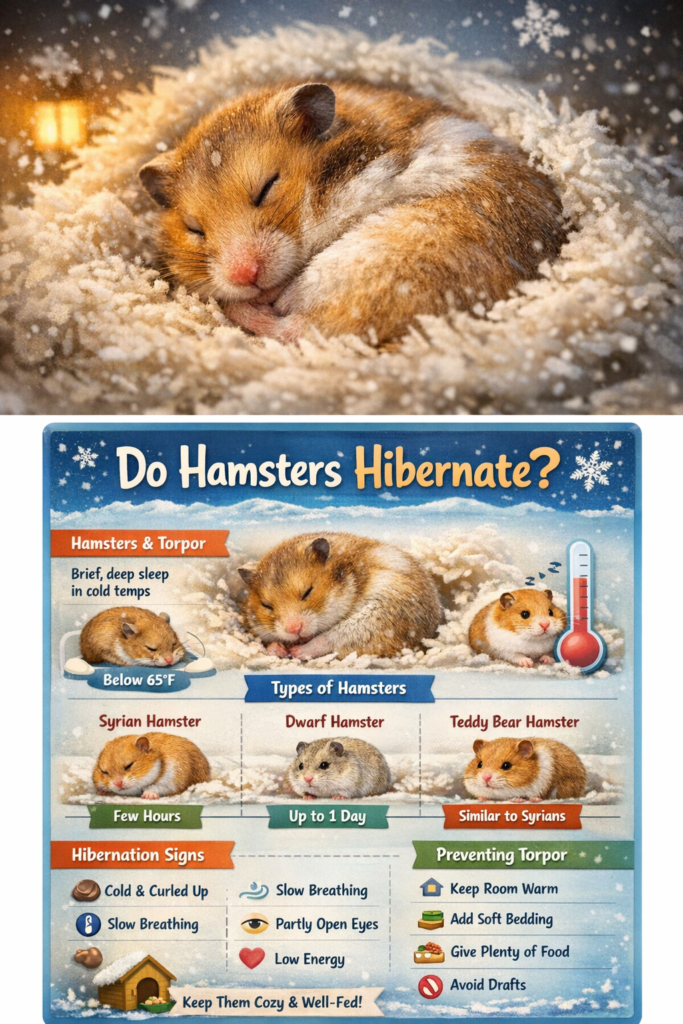
Hamsters do not hibernate like bears. Instead, they may enter torpor, a short-term survival response triggered by cold or lack of food.
During torpor:
- Body temperature drops
- Breathing becomes very slow
- Movement nearly stops
- The hamster curls tightly into a ball
Unlike real hibernation, torpor can last hours to a day or two, not months. Pet hamsters should not enter this state under proper care, which is why maintaining the right environment—cage setup, bedding, and nutrition—is critical.
Temperature Thresholds You Must Know
This is where most owners go wrong.
- Above 70°F (21°C): Ideal, safe range
- 65–69°F (18–20°C): Risk zone (early torpor signs may appear)
- Below 65°F (18°C): High risk of torpor
- Below 60°F (15°C): Dangerous and potentially fatal
If your home drops below 65°F, your hamster is at real risk—especially if the cage is poorly insulated. Choosing the right enclosure size and placement matters, which is covered in this hamster cage guide.
Signs Your Hamster May Be in Torpor
Torpor looks different from normal sleep. Watch for:
- Extremely slow or shallow breathing
- Cold body temperature
- Stiff or tightly curled posture
- Little to no response to touch
- Eyes partially open (common in dwarf hamsters)
A hamster in torpor may look “frozen,” but this does not automatically mean death.
What To Do Immediately (Emergency Actions)
If you suspect torpor:
- Do NOT shake or force movement
- Slowly warm the environment
- Move the cage to a warmer room
- Aim for 70–75°F (21–24°C)
- Add extra bedding for insulation
- Ensure food and water are available
- Wait patiently recovery can take hours
⚠️ Never use direct heat sources like hair dryers or heating pads. Sudden warming can cause shock.
If there’s no improvement after gradual warming, contact a veterinarian.
Do Hamsters Hibernate in Winter?
Not intentionally.
- Syrian and teddy bear hamsters: Rarely enter torpor if kept warm
- Dwarf hamsters: More sensitive to cold and more likely to slip into torpor
- Well-fed, warm hamsters: Usually never experience torpor at all
Winter itself isn’t the cause cold indoor temperatures are. Proper bedding plays a major role here, so choosing the right materials is essential. You can learn more in this hamster bedding guide.
How Long Can Torpor Last?
- Syrian hamsters: A few hours
- Dwarf hamsters: Up to 24 hours (rarely longer)
If a hamster remains completely unresponsive beyond 24 hours, it’s likely not torpor and requires immediate veterinary care. Knowing your hamster’s normal activity level and age also helps—see this hamster lifespan breakdown for reference.
Do Hamsters Hibernate With Their Eyes Open?
Yes—sometimes.
During torpor, hamsters may keep their eyes partially open, which can be unsettling. This is more common in dwarf breeds and does not automatically mean suffering.
Differences by Hamster Type
| Hamster Type | Torpor Risk | Cold Sensitivity | Temperature Tolerance | Best For |
|---|---|---|---|---|
| Syrian Hamsters | 🟢 Very Low | 🟡 Moderate | Handles small drops well | Beginners & families |
| Dwarf Hamsters | 🔴 High | 🔴 Very Sensitive | Needs stable warmth | Experienced owners |
| Teddy Bear Hamsters | 🟢 Very Low | 🟡 Moderate | Similar to Syrians | First-time owners |
Syrian Hamsters
Least likely to enter torpor
Syrian hamsters have larger bodies and slower metabolisms compared to smaller breeds. This helps them retain body heat more effectively, making them far less likely to slip into torpor unless exposed to prolonged cold.
More tolerant of minor temperature drops
A short dip in room temperature such as overnight cooling usually doesn’t affect Syrian hamsters. While they still need warmth, they don’t react as quickly or severely to mild temperature changes as dwarf hamsters do.
Best choice for beginners
Because they are resilient, easy to monitor, and less sensitive to environmental changes, Syrian hamsters are ideal for first-time owners. They’re forgiving of small care mistakes and easier to keep safe year-round.
If you’re new to hamster ownership or choosing your first pet, Syrians consistently rank among the most popular pet hamsters due to their resilience.
Dwarf Hamsters
Highly sensitive to cold
Dwarf hamsters have very small bodies and fast metabolisms, which makes them lose heat quickly. Even slightly cool environments can stress their systems, increasing the risk of torpor.
Enter torpor more easily
Their bodies are quick to activate survival mode. If temperatures drop below 65°F (18°C) or bedding is insufficient, dwarf hamsters may enter torpor much faster than other types.
Require stricter temperature control
Dwarf hamsters need consistently warm environments with minimal fluctuations. Stable indoor temperatures, thick bedding, and protection from drafts are essential to prevent torpor.
Their small size makes them adorable but demanding. If you’re deciding between similar small pets, this gerbil vs hamster comparison can help clarify which suits your lifestyle better.
Teddy Bear Hamsters
Long-haired Syrians
Teddy bear hamsters are not a separate species—they are a long-haired variety of Syrian hamsters. Their care needs and behavior are almost identical to standard Syrians.
Similar behavior to standard Syrians
They share the same calm temperament, size, and tolerance for environmental changes. Their longer fur doesn’t significantly change how they respond to temperature.
Rarely experience torpor in warm homes
When kept in a properly heated environment, teddy bear hamsters almost never enter torpor. As long as room temperatures stay within the safe range, they remain active and healthy.
Because they’re simply a variety of Syrian hamster, their care needs are nearly identical. Learn more in What Is a Teddy Bear Hamster?.
How to Prevent Torpor Completely
Most cases are avoidable. Follow these rules:
- Keep room temperature 70–75°F (21–24°C)
- Add thick, insulating bedding
- Avoid placing cages near windows or drafts
- Ensure constant access to food and water
- Monitor activity during cold months
Daily enrichment—like safe exercise wheels—also helps regulate metabolism. If you’re unsure what’s safe, check this hamster treadmill and exercise guide.
A warm hamster does not need torpor.
Key Takeaway
Hamsters do not hibernate but torpor is real, misunderstood, and preventable.
If your hamster seems lifeless:
- Stay calm
- Check the temperature
- Warm gradually
- Act early
Most torpor cases resolve safely when handled correctly. Consistent care, proper housing, and understanding your pet’s needs make all the difference whether you’re comparing pets like in hamster vs guinea pig or fully committed to hamster ownership.
Tips to Prevent Unwanted Hibernation in Pet Hamsters
- Keep the room temperature steady and warm.
- Provide soft, thick bedding for insulation.
- Offer plenty of food and water.
- Avoid drafts or placing cages near windows in winter.
- Monitor for unusual lethargy sometimes torpor is mistaken for sickness.
These small adjustments make a huge difference. Your hamster won’t need to dip into torpor if their home is cozy enough.
FAQs
1. How can you tell if your hamster is hibernating?
A hibernating hamster will appear very still, with slowed breathing and a lowered body temperature. They may look unresponsive, but this is a natural response to cold temperatures below 65°F (18°C).
2. What is the most common cause of death in hamsters?
The most common causes are old age, respiratory infections, wet tail, and poor cage hygiene. Regular care, clean bedding, and a healthy diet reduce risks.
3. How long will a hamster hibernate?
Hibernation can last several hours to a few days, depending on the temperature and the hamster’s health. They usually wake when the environment warms up.
4. Can you wake up a hibernating hamster?
It’s best not to wake a hibernating hamster abruptly. If necessary, gently warm their cage to around 70°F (21°C), allowing them to gradually regain normal activity.
5. Is 65 degrees too cold for a hamster?
Yes, temperatures below 65°F (18°C) can trigger hibernation and stress your hamster. Keep their environment warm and draft-free, ideally between 70–75°F (21–24°C).
6. What are the last stages of a hamster?
In the final stages, hamsters may show lethargy, loss of appetite, labored breathing, and unresponsiveness. Gentle care and veterinary support are recommended during this time.
7. How to tell if a hamster is suffering?
Signs of suffering include weight loss, lethargy, poor coat condition, labored breathing, diarrhea, or unusual behavior. Prompt veterinary attention is important.
8. What is the average age a hamster dies?
The average lifespan varies by species:
Syrian hamsters: 2–3 years
Dwarf and Chinese hamsters: 2–3 years
Roborovski hamsters: 3–3.5 years
9. What are the signs of a happy hamster?
A happy hamster is active, curious, eating well, grooming itself, exploring its cage, and using its wheel or tunnels regularly.
10. How to tell if a hamster trusts you?
A hamster trusts you when it approaches you without fear, takes food from your hand, climbs onto your fingers, or relaxes while being gently handled. Trust develops gradually with consistent, gentle interaction and patience.
Conclusion
Hamsters do not truly hibernate but they can enter torpor, a cold-triggered survival response that many owners mistake for illness or worse. The difference is critical. Torpor is usually preventable, temporary, and reversible when you understand the signs and act early.
The biggest takeaway is simple: temperature matters more than the season. Most torpor cases happen not because it’s winter, but because indoor environments dip below safe levels. Keeping your hamster warm, well-fed, and free from drafts dramatically reduces the risk especially for smaller, more sensitive breeds like dwarf hamsters.
If your hamster ever appears unusually still or cold, don’t panic and don’t assume the worst. Check the temperature, warm the environment gradually, and give them time to recover. In most cases, informed care makes all the difference.
A warm, stable home isn’t just comfortable for your hamster it’s what keeps torpor from happening in the first place.