Feeding a hamster sounds simple until you actually own one. Suddenly you’re Googling things like can hamsters eat grapes at midnight while your hamster stares at you like you’re withholding state secrets.
This guide breaks down hamster and food in a way that’s easy to scan, easy to remember, and hard to mess up. If you’re just starting out, it pairs well with this beginner-friendly pillar guide on
👉 How to Take Care of a Hamster: Complete Beginner’s Guide
Let’s get into what actually goes in the bowl.
What Can Hamsters Eat Every Day?
Think of your hamster’s diet like a pyramid. Not a perfect one more like a slightly lopsided snack pyramid.
Daily Staple: High-Quality Hamster Food
This should make up about 70–80% of their diet.
- Hamster food pellets (best for balanced nutrition)
- Seed mixes with protein sources
- Breed-specific food (Syrian, dwarf, or Roborovski)
Pellets matter more than people think. They prevent selective eating, which is hamster code for “I only eat sunflower seeds now.”
If you’re weighing whether a hamster fits your lifestyle at all, this comparison of
👉 Hamster vs Guinea Pig
covers feeding effort pretty honestly.
Vegetables Hamsters Can Eat (Regularly)
Vegetables are easier than fruit. Lower sugar, fewer regrets.
Safe Vegetables (Rotate, Don’t Dump All at Once)
- Carrots
- Cucumbers
- Broccoli
- Celery
- Spinach
- Romaine lettuce
- Bell peppers
- Tomatoes (small amounts)
Wash everything. Remove leftovers after a few hours. Hamsters hoard food like tiny dragons, and spoiled veggies turn into science experiments fast.
Fruits Hamsters Can Eat (Occasionally)
Fruit is a treat, not a lifestyle.
Yes, hamsters can eat fruit but sugar adds up quickly, especially for dwarf hamsters.
Safe Fruits (1–2 times per week)
- Apples (no seeds)
- Blueberries
- Strawberries
- Bananas
- Grapes
- Watermelon
So, can hamsters eat grapes? Yes.
Should they eat grapes daily? No. That’s how you get a hamster with opinions and blood sugar issues.
Hamster and Food: Protein Foods Hamsters Can Eat
This surprises a lot of owners: hamsters aren’t strict vegetarians.
Safe Protein Options
- Mealworms
- Plain cooked chicken
- Hard-boiled egg (tiny pieces)
- Plain cheese (crumb-sized)
Can hamsters eat cheese?
Yes—but think “taste,” not “snack.”
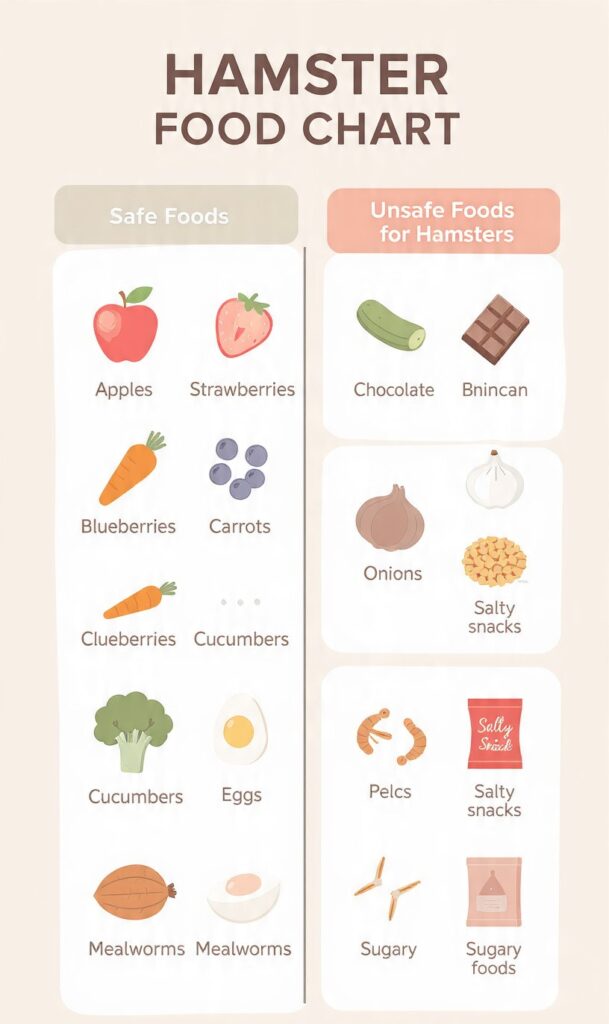
Hamster Food Chart: Safe vs Unsafe Foods
Safe Foods for Hamsters
| Food Type | Examples |
|---|---|
| Fruits | Apples, blueberries, strawberries, bananas |
| Vegetables | Carrots, cucumbers, broccoli, lettuce |
| Protein | Mealworms, eggs, chicken |
| Seeds & Nuts | Sunflower seeds, peanuts (unsalted) |
Unsafe Foods for Hamsters
| Food | Why It’s Dangerous |
|---|---|
| Chocolate | Toxic |
| Onions & garlic | Digestive damage |
| Raw beans | Toxic |
| Sugary junk food | Obesity & diabetes |
| Salty snacks | Kidney stress |
If you’re ever unsure, skip it. Hamsters are small; mistakes scale badly.
How Often Should You Feed a Hamster?
Hamsters are nocturnal, which explains why the bowl looks untouched all day and mysteriously empty at dawn.
Simple Feeding Schedule
- Daily: pellets + fresh water
- 3–4x/week: vegetables
- 1–2x/week: fruit or protein
People often ask how long can a hamster go without food. Technically, 24–48 hours—but that’s not a goal. Regular feeding reduces stress, and stress causes weird behavior.
Speaking of which…
Food, Stress, and Strange Hamster Behavior
Hamsters have a reputation for doing unsettling things, especially when something in their environment feels off. While food is often blamed first, behavior problems usually have more to do with stress than with what’s in the food bowl.
Why Do Hamsters Eat Their Babies?
This is one of the most disturbing questions new owners ask and understandably so. In most cases, it’s not about hunger. Mother hamsters may eat their babies when they feel threatened, stressed, or unsafe.
Common triggers include:
- Too much noise or frequent handling
- Overcrowded cages
- A lack of food or water
- Strong unfamiliar smells, including human scent
From a survival standpoint, it’s a harsh but instinctive response. The mother is reacting to perceived danger, not making a dietary choice.
Do Hamsters Eat Each Other?
Yes, hamsters can eat each other, but again, this usually comes down to stress and territory. Hamsters are naturally solitary animals. When forced to share space—especially as adults—aggression can escalate quickly.
Typical causes include:
- Cages that are too small
- Competition for food or hiding spots
- Mixing hamsters that were not raised together
This behavior isn’t normal in well-set-up environments and is often preventable with proper housing and feeding routines.
How Food Shortages Increase Stress
While diet isn’t the main cause, inconsistent feeding can make stress worse. When food feels scarce, hamsters may become territorial or aggressive. Making sure your hamster always has access to food and fresh water helps reduce tension and supports calmer behavior overall.
Seasonal Changes and Unusual Behavior
Some hamster behaviors look alarming but are actually seasonal. If your hamster becomes less active during colder months, it doesn’t automatically mean something is wrong.
Many owners worry their hamster is sick when it’s simply responding to temperature changes or shorter daylight hours. This is often confused with hibernation, which true pet hamsters don’t usually do. This guide on
👉 Do Hamsters Hibernate?
explains the difference and helps you tell normal behavior from a real problem.
Does Breed Affect Diet?
It actually does, though not as dramatically as you might think. Different hamster breeds have slightly different appetites, tolerances, and preferences, so knowing your hamster’s breed can help you tailor their meals more effectively.
- Syrian hamsters tend to be the food lovers of the hamster world. They eat larger portions and can handle a wider variety of foods—from fresh veggies to small fruit treats. Their bigger size means you can safely offer slightly more at a time, but moderation still matters.
- Dwarf hamsters, on the other hand, are much smaller and more sensitive to sugar. That blueberry or grape you might toss to a Syrian should be carefully portioned for a dwarf, otherwise their tiny bodies can spike blood sugar quickly.
- Roborovski hamsters are picky little creatures. They tend to prefer seeds and finely chopped veggies. You’ll notice them carefully picking through their bowl, often ignoring the bits they don’t like. Observing their behavior helps you figure out what they actually enjoy.
- Long-haired Syrians, affectionately called “teddy bears,” don’t have special dietary needs compared to other Syrians. Their longer fur sometimes makes owners think they require more specialized care, but food-wise, it’s the same. That said, their fluff does mean keeping them clean is easier if treats aren’t too sticky or messy.
So yes, breed can influence portions, tolerance, and preferences, but the basics fresh water, quality pellets, and a variety of safe fruits and veggies apply to all hamsters. If you’re curious about what makes teddy bear hamsters unique beyond their fluff, check out this guide: 👉 What Is a Teddy Bear Hamster?
Are Hamsters Really Low-Maintenance?
Mostly—but only if you feed them properly. That’s why hamsters frequently appear on lists like
👉 Low Maintenance Pets for Busy People and Beginners
Food mistakes are usually what turn an “easy pet” into a stressful one.
Tips for a Healthy Hamster Diet
- Rotate fruits and vegetables to provide variety.
- Introduce new foods gradually.
- Remove uneaten fresh food after a few hours to prevent mold.
- Use vet-recommended hamster food for balanced nutrition.
- Avoid overfeeding treats; moderation prevents obesity.
1. Can hamsters eat strawberries?
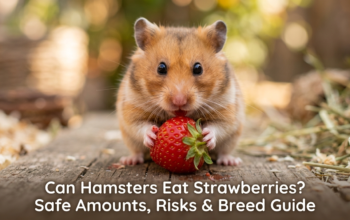
Yes, hamsters can eat strawberries in small amounts. Strawberries are safe and contain vitamin C, but they’re also sugary. Offer a tiny piece once or twice a week, not daily, especially for dwarf hamsters that are more sensitive to sugar.
2.Can hamsters eat grapes?
Hamsters can have grapes, but only occasionally. Grapes are high in natural sugar, so one small piece is enough. Feeding grapes too often may lead to weight gain or blood sugar issues, particularly in dwarf hamster breeds.
3.Can a hamster eat a banana?
Yes, a hamster can eat a banana, but only a very small piece. Bananas are soft and easy to chew, which hamsters love, however they’re high in sugar and should be treated as an occasional treat, not a regular food.
4. Can hamsters have cheese?
Hamsters can have cheese in tiny amounts. Plain, low-fat cheese is safest. Cheese should only be offered as an occasional protein treat since too much dairy can upset a hamster’s digestive system.
5. Do hamsters have tails?
Yes, hamsters do have tails, but they’re very short and often hidden under fur. Unlike mice or rats, hamster tails are stubby and usually less than an inch long, which is why many people think they don’t have tails at all.
6. Can hamsters eat apples?
Hamsters can eat apples, but the seeds must be removed first. Apple seeds contain compounds that are harmful to hamsters. Small apple slices without seeds make a safe and healthy occasional treat.
7. Can hamsters eat blueberries?
Hamsters can eat blueberries safely. They’re soft, antioxidant-rich, and easy to chew. Because blueberries contain sugar, they should be fed sparingly—one small berry at a time is enough.
8. Can hamsters eat carrots?
Hamsters can eat carrots and usually enjoy them. Carrots are crunchy and nutritious, but they do contain natural sugars. Small pieces offered a few times a week are ideal.
9. What can hamsters eat?
Hamsters can eat high-quality hamster pellets, along with small amounts of fresh vegetables like carrots, cucumbers, and broccoli.They can also have occasional fruit treats such as apples, strawberries, or blueberries, but only in moderation.
10. Can hamsters eat watermelon?
Yes, hamsters can eat watermelon, but only in tiny amounts as an occasional treat due to its high water and sugar content.
Final Thoughts
Feeding a hamster well doesn’t require obsession just awareness.
Start with good pellets. Rotate vegetables. Treat fruit like dessert. Watch what your hamster actually eats, not just what you offer. They will tell you more than any label ever will.
And yes, watching a hamster carefully transport a single blueberry to its nest like it’s priceless cargo is still one of the best parts of owning one.