Hamster Eye Infection: 6 Conditions, Symptoms & Vet Treatment (2026)
Hamster Health Guide 2026
Author: Nilo Zubi— Hamster Care Writer · Updated April 2026
Your hamster’s eyes are one of the first places illness shows itself — and one of the most commonly ignored. A little crustiness in the morning might seem harmless, but hamster eye infections can escalate from mild discharge to permanent vision loss within 48–72 hours if left untreated. The problem is that hamsters, as prey animals, hide discomfort until it is severe — which means by the time you notice significant swelling or discharge, the infection has already been developing for some time. This complete guide covers every hamster eye condition, how to tell them apart, vet-recommended treatments, safe home care steps, and how to prevent eye problems from happening in the first place.
Section 1: Why Hamster Eyes Are Unusually Vulnerable
Hamsters have large, prominent eyes set in shallow orbital sockets. This eye structure is an evolutionary adaptation for wide-field vision in the wild — allowing them to spot aerial predators without turning their head. But in captivity, this same anatomy makes them significantly more vulnerable to eye injury, infection, and displacement than most other pet species.
According to PetMD’s veterinary team, hamster eyes protrude enough from their sockets that debris, dust particles, sharp bedding fibres, and even food fragments can easily contact the corneal surface. Additionally, the well-developed orbital sinuses (air cavities behind the eye) mean that dental disease, abscesses, or tumours in the jaw area can directly compress the eye from behind — causing bulging and pain with no visible wound on the eye itself.
| Key Facts About Hamster Eye Anatomy • Shallow orbital sockets make eyes vulnerable to protrusion (proptosis/exophthalmia) from even minor trauma • Large orbital sinuses behind the eye are directly connected to the dental root area — tooth infections can push eyes outward • Hamsters have a third eyelid (nictitating membrane) which can become visible when irritated — often mistaken for a growth • Hamster eyesight is naturally very poor — even a healthy hamster is nearly blind beyond a few centimetres • Because hamsters are prey animals, they suppress visible pain signals — eye discomfort is often only apparent once it has become significant |
Section 2: Healthy Eye vs Infected Eye — What to Look For
The first step in identifying a problem is knowing what healthy hamster eyes look like. Check your hamster’s eyes briefly during its evening active period — good lighting and a calm hamster are essential for accurate observation.
Healthy Hamster Eyes
- Bright, round, and fully open
- Clear — no cloudiness or film
- Black or dark red in colour (albino breeds)
- Minimal discharge — a tiny dry crust at the corner on waking is normal
- Both eyes symmetrical in size
- No swelling around the eyelids
- No squinting or partial closure
- No pawing at the face or eye area
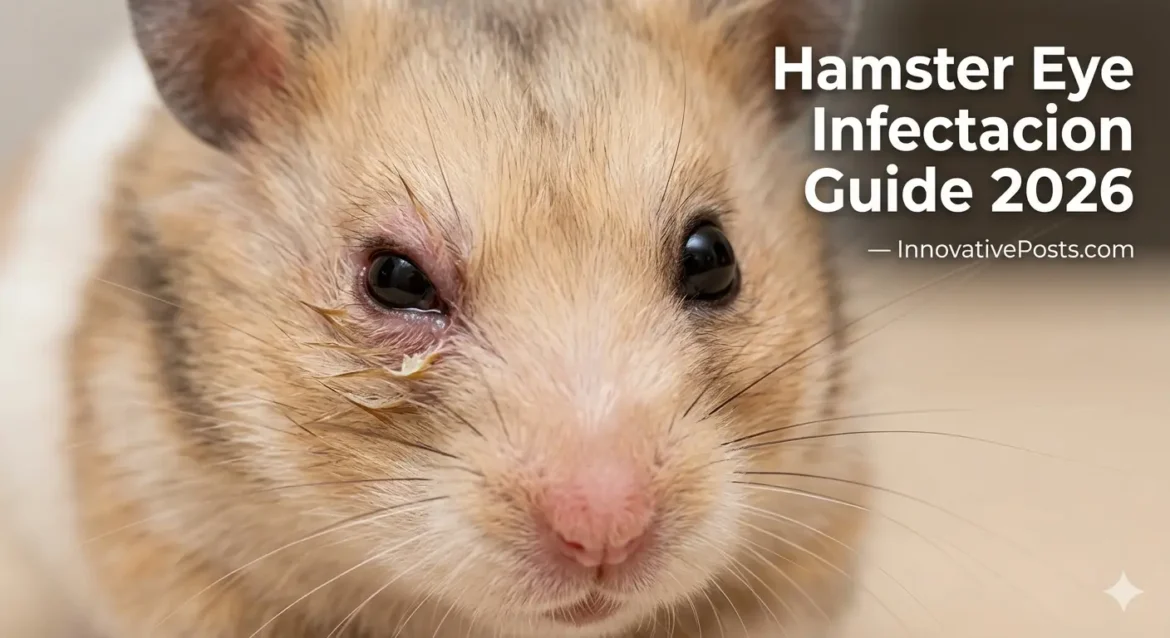
Signs of Eye Infection / Problem
- Discharge — watery, white, yellow, or green
- Crusty eyelids — eye stuck partially or fully shut
- Redness or swelling around the eye
- Cloudiness, haziness, or blue-white film on eye surface
- One eye visibly larger or more prominent than the other
- Squinting or keeping one eye permanently closed
- Pawing at face repeatedly
- Eye appears to be bulging or protruding
| See a Vet Within 24 Hours If You Notice: • Yellow or green discharge — indicates bacterial infection requiring prescription antibiotics • Eye completely stuck shut — discharge has dried and sealed the eyelid • Visible bulging or protrusion of one or both eyes • Cloudy, white, or blue film across the eye surface • Eye appears to have moved out of position in the socket • Any eye symptom combined with loss of appetite, lethargy, or not eating |
Section 3: 6 Hamster Eye Conditions — Complete Guide
Not all hamster eye problems are simple infections. Understanding exactly which condition your hamster has determines the correct treatment. Here is a complete breakdown of every eye condition hamsters commonly develop, from the most common to the most serious.
| 1. Conjunctivitis (Pink Eye) [See Vet: 24–48 hrs] |
| Conjunctivitis is the most common hamster eye infection and involves inflammation of the conjunctiva — the thin pink membrane lining the inside of the eyelids and the white of the eye. It is caused by bacterial or viral infection, allergic reaction, foreign body irritation, or spread from a respiratory infection. As confirmed by PetMD’s exotic veterinary team, bacterial conjunctivitis is the most frequently diagnosed type in pet hamsters. Conjunctivitis typically begins with mild redness and a watery discharge, progressing over 24–48 hours to thicker yellow or green discharge, crusting around the eyelids, and eventually the eyelids sticking shut. Both bacterial and viral forms are contagious to other hamsters — quarantine is essential if you house multiple hamsters together. SIGNS Redness around eyelid rimWatery then yellow/green dischargeCrusty, sticky eyelidsEye stuck shut on wakingSquinting or blinking frequently TREATMENT Warm saline flush to clean dischargePrescription topical antibiotic eye drops (ciprofloxacin, ofloxacin or terramycin)Oral antibiotics if systemic spread suspected7–14 day treatment courseQuarantine from other hamsters |
| 2. Sticky Eye (Eyelid Adhesion) [Monitor: Home care first] |
| Sticky eye is a condition where dried discharge causes the eyelids to seal together — partially or completely. It is often the result of mild conjunctivitis, a dusty bedding environment, or cold/respiratory infection. Older hamsters (18+ months) are particularly prone to sticky eye, even without active infection, simply because tear duct function naturally decreases with age. Persistent cases require a vet visit to rule out underlying infection or dental problems affecting the tear duct. SIGNS One or both eyelids fused shutDried crust visible around eye marginsHamster bumping into objectsPawing at sealed eye repeatedlyMore common in senior hamsters TREATMENT Warm sterile saline on cotton pad — hold gently over eye for 30 secondsGently wipe along lid margin to soften crustNever force eyelids openRepeat 2–3× daily until eye opens naturallyVet if not open within 48 hours |
| 3. Corneal Ulcer [See Vet: Same Day] |
| A corneal ulcer is an open wound on the clear surface of the eye (the cornea). It occurs when the corneal tissue is damaged — by sharp bedding fibres, food particles, cage accessories with rough edges, fighting with cage mates, or as a complication of untreated conjunctivitis. Corneal ulcers are extremely painful and represent a genuine veterinary emergency in hamsters. The classic sign of a corneal ulcer is a visible cloudiness, haziness, or blue-white opacity on the surface of the eye. Without prompt treatment, ulcers can deepen, leading to irreversible vision loss. A corneal stain test (fluorescein dye) at the vet confirms the diagnosis definitively. SIGNS Visible cloudy/hazy patch on eye surfaceBlue or white opacity on corneaSevere squinting or eye kept shutExcessive tearingExtreme light sensitivityLoss of appetite from pain TREATMENT Fluorescein stain to confirm ulcer at vetTopical antibiotic eye ointment (ciprofloxacin)Oral pain medication (meloxicam)Topical pain drops (diclofenac)Cage audit to remove sharp objectsSeparate from cage mates immediately |
| 4. Exophthalmia (Eye Bulging / Proptosis) [Emergency — Same Day] |
| Exophthalmia — commonly called “bug eye” or proptosis — is when one or both eyes protrude significantly beyond their normal position in the shallow socket. True exophthalmia is a veterinary emergency, caused by pressure building behind the eye — from a retrobulbar abscess, dental disease with root involvement, a tumour, internal bleeding, or severe trauma. Because hamsters have well-developed orbital sinuses directly connecting the jaw and tooth root area to the space behind the eye, dental abscesses are a leading hidden cause of eye bulging. In severe cases where the eye cannot be saved, enucleation (surgical removal) is performed — hamsters adapt remarkably well to life with one eye. SIGNS One eye visibly larger or protrudingEye appears partially out of socketSevere swelling around eyeEye not moving normallyStopped eating — pain signalEye surface drying out (unable to blink) TREATMENT Same-day emergency vet — no exceptionsX-ray/CT to identify retrobulbar abscessDental exam under sedationAntibiotics + pain managementSurgical drainage of abscess if presentEnucleation if eye cannot be saved |
| 5. Cataracts [Monitor — Vet Confirmation] |
| Cataracts appear as a white or grey opacity inside the eye — behind the cornea, in the lens itself. They are most common in older hamsters (18+ months) and in Campbell’s dwarf hamsters, which have a genetic predisposition to diabetes. Cataracts are not painful and do not cause infection, but they do cause progressive vision loss. There is currently no surgical treatment for cataracts in hamsters. Vet confirmation is important because symptoms overlap with corneal ulcers, which do require treatment. SIGNS White/grey opacity inside the eyeOpacity appears to be behind cornea surfaceNo discharge or redness typicallyMore common in 18+ month hamstersCampbell’s dwarfs especially at risk TREATMENT Vet confirmation to rule out ulcerNo cure available currentlyEnsure consistent cage layout — hamster relies on memoryNo rearranging cage accessoriesCheck for underlying diabetes (Campbell’s dwarfs) |
| 6. Eye Infection from Respiratory Illness [See Vet: 24 hrs] |
| Hamsters can contract respiratory infections — including colds that can spread from humans — and these infections frequently affect the eyes simultaneously. The tear ducts connecting the eye and nasal passages allow bacteria or viruses to travel directly to the eye surface. This type of eye problem looks like conjunctivitis but is always accompanied by other respiratory signs. Treating just the eye without addressing the respiratory infection will always fail. If you have a cold or respiratory illness, do not handle your hamster. SIGNS Watery, red eye WITH sneezingNasal discharge alongside eye dischargeLaboured or audible breathingLethargy and reduced activityBoth eyes often affected simultaneously TREATMENT Treat respiratory infection first — oral antibioticsEye drops as supportive care onlyWarm, draught-free environmentTemperature 68–74°F (20–23°C)No handling by anyone with a cold |
Section 4: 9 Common Causes of Hamster Eye Infections
Understanding the root cause is the only way to treat the infection and prevent recurrence. Most hamster eye infections are caused by one of these nine factors:
Dusty or Cedar Bedding
Fine dust particles from cedar shavings, dusty paper bedding, or scented substrate directly irritate the corneal surface, causing inflammation that opens the door to bacterial infection. Always use dust-free, unscented paper bedding.
Dirty Cage / Bacterial Buildup
Moist bedding — especially around a tipped water bowl — creates an ideal environment for bacterial and mould growth.
Sharp Bedding or Accessories
Rough wood shavings, dried food pieces with sharp edges, or cage accessories with rough or broken surfaces can physically scratch the cornea.
Fighting / Injury from Cage Mates
Bite wounds near the eye are a direct cause of both corneal ulcers and retrobulbar abscesses. Syrian hamsters must always be housed alone.
Dental Disease
Tooth root abscesses in the upper jaw sit directly below the orbital sinus and can push the eye forward from inside without any visible wound.
Respiratory Infection
Upper respiratory infections spread to the eyes through the tear duct system.
Nutritional Deficiency
Vitamin A deficiency specifically affects eye health in rodents. A seed-only diet is a common cause — switch to high-quality pellets for complete nutrition.
Chronic Stress
Chronic stress suppresses immune function, making hamsters significantly more susceptible to infections of all kinds.
Age-Related Changes
Hamsters over 18 months experience natural decline in immune function and tear duct efficiency.
Section 5: Safe Home Care Steps for Mild Eye Infections
For mild cases, safe home care can provide relief while you arrange a vet appointment. Home care does not replace veterinary treatment for bacterial infections, but it keeps the eye clean and comfortable in the interim.
- Wash your hands thoroughly. Before touching your hamster’s eye area, wash hands with unscented soap for at least 20 seconds.
- Prepare sterile saline solution. Use a commercially purchased sterile saline eye wash. Never use tap water directly.
- Gently restrain your hamster. Wrap in a soft towel to prevent sudden movement.
- Apply saline with a clean cotton pad. Hold gently against the closed eye for 20–30 seconds, then wipe from inner corner outward.
- Never force eyelids open. Continue gentle saline soaking until the crust softens.
- Clean 2–3 times daily until the eye is clear. Keep a log of how the eye looks each day.
- Deep clean the cage immediately. Remove all bedding, wash accessories, replace with fresh dust-free bedding.
- See a vet if no improvement in 48 hours. Prescription antibiotic eye drops are needed if discharge turns yellow or green.
| Never Use These on Your Hamster’s Eyes • Human over-the-counter eye drops (Visine, antihistamine drops) — not formulated for hamsters • Boric acid solutions — irritating and potentially harmful • Antibiotic eye drops prescribed for another animal — dosing differs significantly • Cotton wool (fluffy type) — fibres can catch on the eye surface • Any product containing steroids without vet guidance |
Section 6: What the Vet Will Do — Diagnosis and Treatment
A vet experienced in exotic or small animal medicine will follow a systematic diagnostic approach:
| Diagnostic Step | What It Checks | When Used |
| Physical eye exam | Redness, swelling, discharge type, eyelid position | Every eye appointment — always first |
| Fluorescein stain | Corneal ulcers — dye glows green under UV light | Any cloudy eye or suspected ulcer |
| Intraocular pressure check | Glaucoma — abnormally high pressure inside the eye | Bulging eyes or suspected glaucoma |
| Discharge culture/swab | Identifies specific bacteria for targeted antibiotic | Severe or recurring infections |
| Dental and oral exam | Tooth root abscesses pushing eye forward | Any bulging eye — mandatory |
| X-ray or CT scan | Retrobulbar abscess, tumour, or dental disease | Exophthalmia cases |
Prescription Medications Your Vet May Prescribe
| Medication Type | Examples | Used For |
| Topical antibiotic eye drops | Ciprofloxacin, Ofloxacin, Erythromycin, Terramycin | Bacterial conjunctivitis, corneal ulcer |
| Oral antibiotics | Doxycycline, Enrofloxacin, Trimethoprim/Sulfa | Systemic infection, retrobulbar abscess |
| Oral pain relief | Meloxicam | Corneal ulcer, exophthalmia, post-surgery |
| Topical pain drops | Diclofenac, Flurbiprofen | Pain management for severe ulcers |
| Sterile eye lubricant | Artificial tears (hamster-safe) | Dry eye, post-cleaning lubrication |
| How to Apply Eye Drops to a Hamster • Have one person hold the hamster wrapped in a soft towel, affected eye facing upward • Use the other person’s fingers to gently hold the eyelids open • Position the drop bottle just above the eye — never let the bottle tip touch the eye surface • Gently squeeze to release one drop — gravity does the work • Never stop medication early — complete the full course even if the eye looks better • A typical course is 7 days, sometimes up to 14 days for severe cases |
Section 7: How to Prevent Hamster Eye Infections
Most hamster eye infections are entirely preventable with the right environment and care routine:
- Use dust-free, unscented paper bedding exclusively — no cedar, no pine, no dusty shavings
- Spot clean the cage every 2–3 days and change bedding regularly
- Audit the cage regularly for sharp accessories, rough edges, or broken toys
- House Syrian hamsters alone — always
- Feed a high-quality pellet diet with at least 16% protein — not seed mix alone
- Place the cage in a draught-free location
- Wash hands thoroughly before and after every interaction with your hamster
- Schedule an annual exotic vet wellness check
- Check your hamster’s eyes briefly during every evening active period
Frequently Asked Questions (2026)
What does a hamster eye infection look like?
A hamster eye infection typically begins with redness around the eyelid rim and a watery discharge that progresses over 24–48 hours to thicker yellow or green pus. The eyelids often become crusted and can stick together. In more serious conditions, cloudiness may develop over the eye surface, or the eye may protrude from the socket.
Can a hamster eye infection heal on its own?
Rarely, and only in the very mildest cases of environmental irritation. Bacterial eye infections do not resolve without antibiotic treatment. Do not wait more than 48 hours to seek veterinary attention for any eye with coloured discharge.
My hamster’s eye is stuck shut — what do I do right now?
Do not force the eye open. Prepare a sterile saline solution, soak a clean cotton pad, and hold it gently against the closed eye for 30 seconds to soften crusting. If the eye does not open within 48 hours, see a vet immediately.
Can hamster eye infections spread to humans?
The bacteria that cause hamster conjunctivitis are generally not transmissible to humans. However, basic hygiene is essential. The primary concern runs in the opposite direction — humans can transmit respiratory viruses to hamsters.
Why is my hamster’s eye bulging?
A bulging eye is a same-day veterinary emergency. Common causes include a retrobulbar abscess, dental disease pushing the eye forward, a tumour, or direct trauma. Always request a dental examination alongside the eye assessment.
Can I use human eye drops on my hamster?
No. Human over-the-counter eye drops are not formulated for hamsters and can cause irritation or toxicity. The only safe home option is plain sterile saline solution. All treatment eye drops require a veterinary prescription.
How long does a hamster eye infection take to heal?
Straightforward bacterial conjunctivitis typically resolves within 7–10 days of antibiotic eye drops. Corneal ulcers take 2–4 weeks. Retrobulbar abscesses require 2–6 weeks depending on severity. Never stop medication early.
My hamster’s eye looks cloudy — what does this mean?
An opacity inside the eye is most likely a cataract — untreatable but not painful. A haze on the corneal surface itself is most likely a corneal ulcer, which requires same-day veterinary treatment. When in doubt, treat it as urgent.
Are eye infections contagious between hamsters?
Yes — bacterial and viral conjunctivitis are contagious between hamsters. Quarantine the infected hamster immediately and clean all shared accessories thoroughly.
Can a hamster live normally with one eye?
Yes — remarkably well. Hamster eyesight is naturally very limited to begin with, so they rely primarily on smell, hearing, and whisker sensitivity. Keeping the cage layout consistent is the most important post-enucleation care step.
Final Thoughts: Small Eyes, Urgent Care
Hamster eye infections are one of the most time-sensitive health conditions in small animal care. What begins as a little morning crustiness can become a corneal ulcer within 48 hours and vision loss within a week if left untreated.
Check your hamster’s eyes every evening. Know what healthy looks like. Act within 24 hours of any coloured discharge, swelling, or squinting. Keep the cage dust-free and clean. And always complete prescribed medication courses in full — even when the eye looks better.
Your hamster’s eyesight may already be limited by nature. Protecting what vision they have is one of the most meaningful things you can do for their quality of life.
Written by Nilo Yaqeen | Updated: April 2026 | InnovativePosts.com
Veterinary references: PetMD Hamster Eye Infections · NIH Ophthalmic Disease in Small Mammals