Maintaining the right weight is one of the most important parts of hamster care. A hamster that is underweight may be sick or stressed, while an overweight hamster can develop serious health issues.
This guide explains healthy hamster weight by breed and age, includes a hamster weight chart, specifically the Hamster Weight Chart by Breed and Age, and provides a free weight calculator to instantly check if your hamster is within the healthy range.
If you’re new to hamster ownership, start with our complete hamster care guide:
How to Take Care of a Hamster: Complete Beginner’s Guide
Free Hamster Weight Calculator
Use the calculator below to check if your hamster is within the healthy weight range.
Hamster Weight Checker
Tip: Weigh your hamster once per week using a small kitchen scale for the most accurate tracking.
Why Monitoring Hamster Weight Matters
Understanding the Hamster Weight Chart by Breed and Age
Understanding your hamster’s weight is key to spotting health issues early. Tracking changes can help prevent serious problems before they become critical.
Use the Hamster Weight Chart by Breed and Age to see what’s normal for your pet. A sudden change in weight may indicate several underlying causes:
- Poor diet: Nutritional imbalances often cause underweight or overweight hamsters. Make sure your pet’s food is appropriate by checking the Hamster and Food: Feeding Guide With Safe & Unsafe Food.
- Dental problems: Overgrown teeth can make eating painful, leading to weight loss. Early detection is crucial—see common dental issues in Hamster Diseases: What Every Pet Owner Should Know.
- Stress or illness: Environmental stressors or infections may reduce appetite or trigger sudden weight gain. Learn how to recognize warning signs in Hamster Diseases: What Every Pet Owner Should Know.
- Lack of exercise: Hamsters that aren’t active may become overweight. Encourage movement with safe enrichment tools like wheels or treadmills, detailed in Hamster Treadmill: A Complete Guide to Safe Exercise Wheels.
- Aging-related changes: Metabolism and activity levels naturally shift as hamsters age, which can affect weight. Understand each stage from baby to senior in Hamster Life Stages: Baby to Senior.
- Regular weight monitoring, combined with proper diet, exercise, and health checks, ensures your hamster stays happy and healthy throughout its life.
Average Hamster Weight by Breed
Different hamster breeds naturally have different body sizes. A Syrian hamster will weigh much more than a Roborovski hamster.
If you're unsure which hamster species you have, see this list of the most common pet hamster breeds:
5 Most Popular Pet Hamsters

Hamster Weight by Age
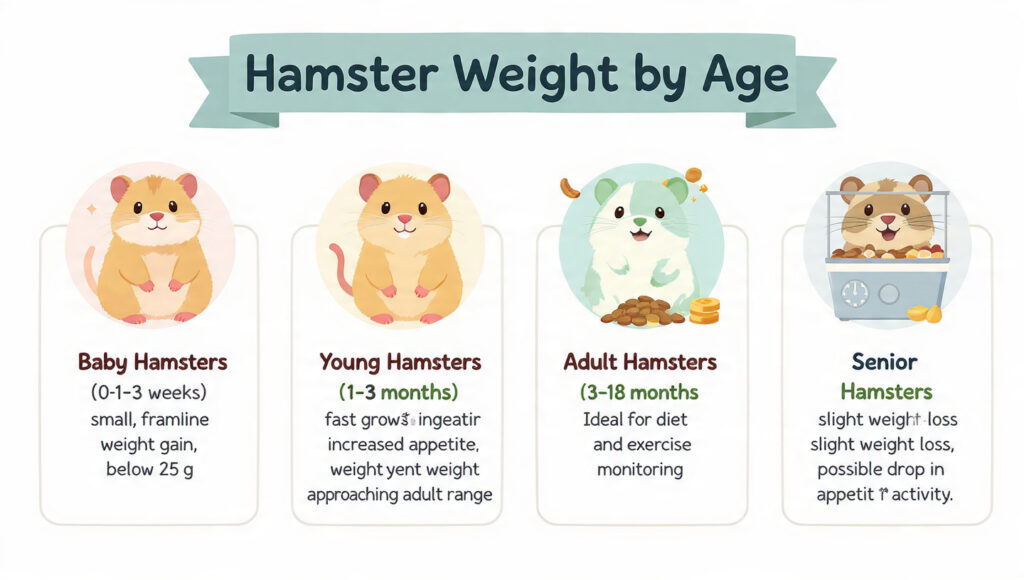
Baby Hamsters (0–4 weeks)
• Very small and fragile
• Rapid weight gain occurs
• Typically below 25 g depending on breed
Young Hamsters (1–3 months)
• Fast growth stage
• Appetite increases
• Weight approaches adult range
Adult Hamsters (3–18 months)
• Stable weight range
• Ideal time for monitoring diet and exercise
Senior Hamsters (18+ months)
• Weight may decrease slightly
• Appetite or activity levels may drop
To understand how age impacts hamster health and lifespan:
Hamster Average Lifespan by Breed
Signs Your Hamster May Be Overweight
An overweight hamster may show several warning signs.
Common symptoms include:
• difficulty running on the wheel
• reduced activity levels
• visible fat around the abdomen
• trouble grooming
Exercise and proper cage enrichment are essential to prevent obesity. Make sure your hamster has the right cage size and setup.
Hamster Cage Guide: Sizes, Types, Setup & How to Choose the Best One
Lack of stimulation may also lead to behavioral issues like biting.
Hamster Biting: Causes, Prevention, and Fixes
Signs Your Hamster May Be Underweight
A hamster below the healthy weight range could have:
• dental problems
• parasites
• illness
• poor nutrition
Watch for these symptoms:
• visible bones
• low energy
• rough or scruffy fur
• reduced appetite
If symptoms continue, consult a small-animal veterinarian.
Also ensure your hamster has constant access to clean drinking water.
The Ultimate Guide to Choosing a Hamster Water Bottle
Tips to Maintain a Healthy Hamster Weight
Keeping your hamster in the healthy weight range requires a balance of diet and exercise.
Provide a balanced diet
A good hamster diet should include:
• quality hamster pellets
• small portions of vegetables
• occasional fruits
• protein sources like mealworms
A comfortable environment is also important. Choosing the right bedding helps reduce stress and maintain overall health.
Hamster Bedding: How to Choose the Best Bedding
Encourage exercise
Daily activity helps prevent obesity.
Provide:
• exercise wheels
• tunnels
• chew toys
• climbing structures
Monitor weight regularly
Tracking weight helps detect health issues early.
Seasonal changes can also affect hamster behavior. Some hamsters may enter torpor or hibernation-like states in cold temperatures.
Do Hamsters Hibernate?
Frequently Asked Questions
1. What is the ideal weight for a Syrian hamster?
Most Syrian hamsters weigh 100–220 grams depending on age, genetics, and diet.
2. How often should I weigh my hamster?
Once per week is ideal for tracking health trends.
3. Can hamsters become obese?
Yes. Overfeeding treats and lack of exercise can cause obesity.
4. Why is my hamster losing weight?
Weight loss may indicate stress, illness, or dental problems.
5. What is a healthy hamster's weight?
A healthy hamster’s weight depends on the breed: Syrian (100–220 g), Roborovski (20–35 g), Campbell (25–50 g), Winter White (30–55 g), Chinese (35–50 g).
6.How do I weigh my hamster?
Use a small kitchen or digital scale. Place your hamster gently in a container and weigh weekly for accurate tracking.
7. How old is 2 years for a hamster?
Two years is considered senior age for most hamsters, roughly equivalent to 70–80 human years in terms of health and activity.
8. Do hamsters need salt?
No, hamsters get sufficient sodium from a balanced diet; extra salt can be harmful.
9. Why is my hamster so heavy?
Overweight hamsters usually result from excess treats, lack of exercise, or poor diet. Ensure proper wheel exercise and portion control.
10. What can hamsters not eat?
Avoid chocolate, onions, garlic, citrus, sugary foods, raw beans, and processed human snacks—they are toxic or hard to digest.
Final Thoughts
Monitoring hamster weight is one of the easiest ways to protect your pet’s health. By tracking weight regularly, providing a balanced diet, and encouraging daily exercise, you can ensure your hamster lives a long and healthy life.
Use the weight calculator above to quickly check if your hamster is within the healthy range.
If you are researching easy pets for beginners, you may also enjoy:
Top 10 Low Maintenance Pets for Busy People and Beginners