Hamsters are adorable, tiny companions, but they can sometimes display behaviors that worry their owners. One of the most alarming signs is when a hamster starts shaking. If you’ve ever asked yourself, “why is my hamster shaking?”, you’re not alone.
While some shaking might be harmless, other times it can indicate a serious health problem. This article will explore the main reasons behind hamster shaking, how to identify underlying issues, and what steps to take to ensure your pet’s well-being.
Understanding Normal vs. Abnormal Shaking
Before panicking, it’s important to differentiate between normal and abnormal shaking. Some minor tremors can happen during sleep, excitement, or stress.
For instance, hamsters occasionally twitch in their sleep due to dreams or sudden noises in their environment. This type of shaking is typically short-lived and not accompanied by other worrying signs.
However, persistent shaking, trembling, or signs of distress are abnormal. If your hamster is shaking frequently, seems lethargic, is not eating, or exhibits unusual breathing, it could be a symptom of illness or injury. Paying attention to these signs is crucial for early intervention and treatment.
Common Causes of Hamster Shaking
1. Cold Environment
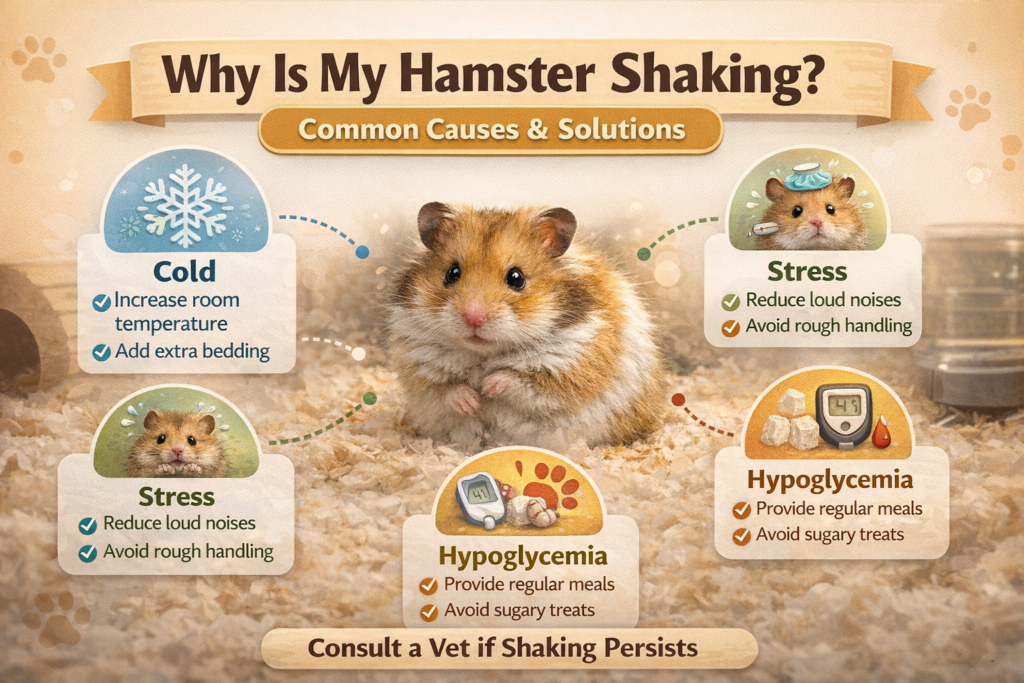
One of the simplest explanations for a shaking hamster is that it’s too cold. Hamsters are sensitive to temperature changes. Ideal temperatures for hamsters are between 65°F and 75°F (18°C to 24°C). Temperatures below this range can cause your hamster to shiver as its body attempts to maintain warmth.
If your hamster is shaking and appears cold, you might also notice curled-up posture, huddling in bedding, or a reluctance to move. In these cases, warming your hamster gradually with a heated pad designed for small animals or providing extra bedding can help. For more tips on creating the ideal habitat, check our Hamster Bedding Guide. Avoid placing them directly under a heat source, as this can cause burns or overheating.
2. Stress or Anxiety
Hamsters can experience stress due to sudden environmental changes, loud noises, or unfamiliar handling. Stress can lead to shaking as a physiological response. Common stressors include:
- Being handled too roughly
- A new cage or rearranged environment
- Presence of other pets nearby
- Excessive noise or vibrations
Signs of stress-related shaking may include pacing, frequent hiding, squeaking, or aggressive behavior. Reducing stressors and creating a quiet, secure environment can alleviate shaking caused by anxiety. For comprehensive care tips, refer to our How to Take Care of a Hamster: Complete Beginner’s Guide.
3. Illness and Disease
Persistent shaking can often indicate an underlying health issue. Some common medical causes include:
a) Respiratory Infections
Hamsters are prone to respiratory illnesses, especially in environments with high humidity or poor ventilation. Symptoms of a respiratory infection include shaking or trembling, wheezing, labored breathing, sneezing, nasal discharge, and lethargy. Prompt veterinary care is essential.
b) Wet Tail
Wet tail is a serious gastrointestinal infection primarily affecting young hamsters. It causes diarrhea, dehydration, lethargy, and shaking. Learn more about prevention and treatment in our Hamster Wet Tail: Symptoms, Causes, Treatment, and Survival Guide.
c) Neurological Issues
Shaking can sometimes stem from neurological disorders or injuries. Conditions like stroke, tumors, or nerve damage can manifest as tremors or difficulty walking. Observing your hamster’s gait and coordination can help identify if neurological problems are present.
4. Hypoglycemia (Low Blood Sugar)
Small breeds, particularly dwarf hamsters, are susceptible to hypoglycemia. Low blood sugar can cause shaking, weakness, lethargy, and loss of appetite. Providing frequent small meals and avoiding sugary human treats can help prevent hypoglycemia. Severe cases require immediate veterinary attention.
5. Pain or Injury
If your hamster has sustained an injury, it might shake due to pain or stress. Common causes include:
- Falls from cage levels or wheels
- Bites from other hamsters
- Trapped limbs in cage accessories
Observe your hamster closely for swelling, limping, or sensitivity when touched. A veterinarian can diagnose and treat injuries appropriately.
Observing Shaking During Sleep
Many hamster owners notice shaking specifically while their pet is resting or sleeping. Why is my hamster shaking while sleeping? This can occur for several reasons:
- Dreaming or twitching: Hamsters experience REM sleep, causing small twitches.
- Temperature fluctuations: Cold environments can trigger shivering even during sleep.
- Early signs of illness: Persistent shaking during sleep may indicate infections or neurological issues.
If your hamster only shakes occasionally during sleep and otherwise behaves normally, it’s likely harmless. Prolonged or intense shaking warrants closer observation.
Why Is My Hamster Cold and Shaking?
Cold-induced shaking is straightforward to address. In addition to adjusting room temperature, you can:
- Add extra nesting material such as shredded paper or hay
- Ensure the cage is away from drafts, windows, or AC vents
- Consider a small ceramic heating disk designed for small pets
Never use a heating pad directly under the cage without insulation, as hamsters can overheat or get burned.
Why Is My Hamster Shaking and Struggling to Walk?
Monitoring and Tracking Behavior
Keeping a journal of your hamster’s behavior can help identify patterns and triggers for shaking. Record:
- Frequency and duration of shaking episodes
- Time of day when shaking occurs
- Associated symptoms (lethargy, loss of appetite, labored breathing)
- Environmental changes
This information helps veterinarians diagnose causes accurately.
Steps to Take if Your Hamster Is Shaking
- Check the Environment: Ensure the cage is warm, dry, and free from drafts. Remove stressors.
- Observe Closely: Look for lethargy, abnormal breathing, or signs of injury.
- Provide Supportive Care: Offer warmth, hydration, and food. Avoid excessive handling if stressed.
- Seek Veterinary Attention: Persistent shaking with other symptoms requires professional care.
Why Is My Hamster Shaking and Struggling to Walk?
Preventing Shaking in Hamsters
Prevention focuses on maintaining a healthy, stress-free environment:
- Maintain proper cage temperature and bedding
- Provide a balanced diet with regular small meals
- Minimize sudden environmental changes and loud noises
- Regularly clean the cage to prevent infections
- Handle your hamster gently and gradually accustom it to human interaction
Regular observation and early intervention are key. Recognizing subtle signs of distress before they escalate can save your hamster from serious illness.
For tips on keeping your hamster mentally and physically stimulated, see 5 Top Hamster Toys for Mental and Physical Stimulation.
FAQs
1. What are end of life signs in hamsters?
Hamsters nearing the end of life may become very inactive, eat less, show labored breathing, have unkempt fur, and avoid interaction.
2. Is it normal for hamsters to vibrate?
Mild vibrations can happen when a hamster is excited or exploring, but sudden shaking may indicate illness or stress.
3. What are the signs of a stressed hamster?
Signs include excessive biting, fur chewing, hiding, rapid breathing, aggression, and restless pacing.
4. How to tell if a hamster is unwell?
Look for lethargy, weight loss, changes in eating or drinking, discharge from eyes or nose, and abnormal droppings.
5. How does a hamster act before it dies?
Hamsters may isolate themselves, sleep more, stop eating or drinking, and show decreased responsiveness.
6. What is the average age a hamster dies?
Most hamsters live between 2 to 3 years, depending on species and care.
7. What are 5 warning signs of stress?
Hiding excessively, aggression, loss of appetite, fur chewing, and constant pacing are key stress indicators.
8. Do hamsters prefer lights on or off?
Hamsters are nocturnal and prefer dim or dark environments, being most active at night.
9. Why is my hamster suddenly shaking?
Shaking can be caused by cold, fear, illness, or neurological issues; monitoring behavior is important.
10. What are signs a hamster is too cold?
Shivering, huddling, lethargy, and puffed-up fur indicate your hamster may be too cold.
Conclusion
The question, “why is my hamster shaking?”, can have multiple answers, ranging from harmless twitches during sleep to serious medical conditions. Common causes include cold temperatures, stress, illness, low blood sugar, or injury. Observing the context, duration, and associated symptoms of shaking is essential in determining whether your hamster needs veterinary care.
Creating a warm, safe, and stress-free environment, providing proper nutrition, and monitoring behavior closely will help keep your pet healthy and happy. If shaking persists or is accompanied by signs of illness, immediate veterinary consultation is the safest course of action.
By understanding the underlying reasons for shaking and responding appropriately, you can ensure your hamster remains a lively, comfortable, and thriving companion.