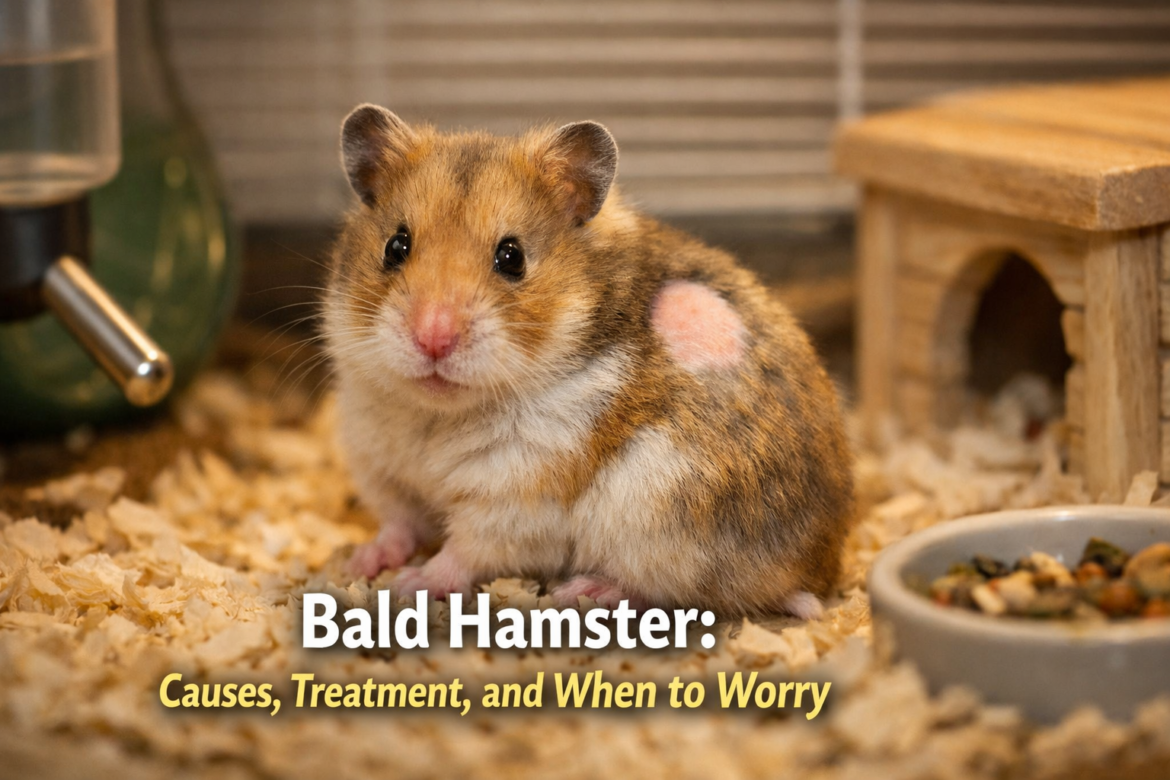
Noticing a bald hamster can be worrying, especially if the hair loss appears suddenly or spreads quickly. While some cases are harmless, others can signal serious health issues that require immediate attention.
Hair loss (alopecia) in hamsters is not a disease itself it’s a symptom. The key is identifying the root cause and taking the right action early.
Why Is My Hamster Bald?
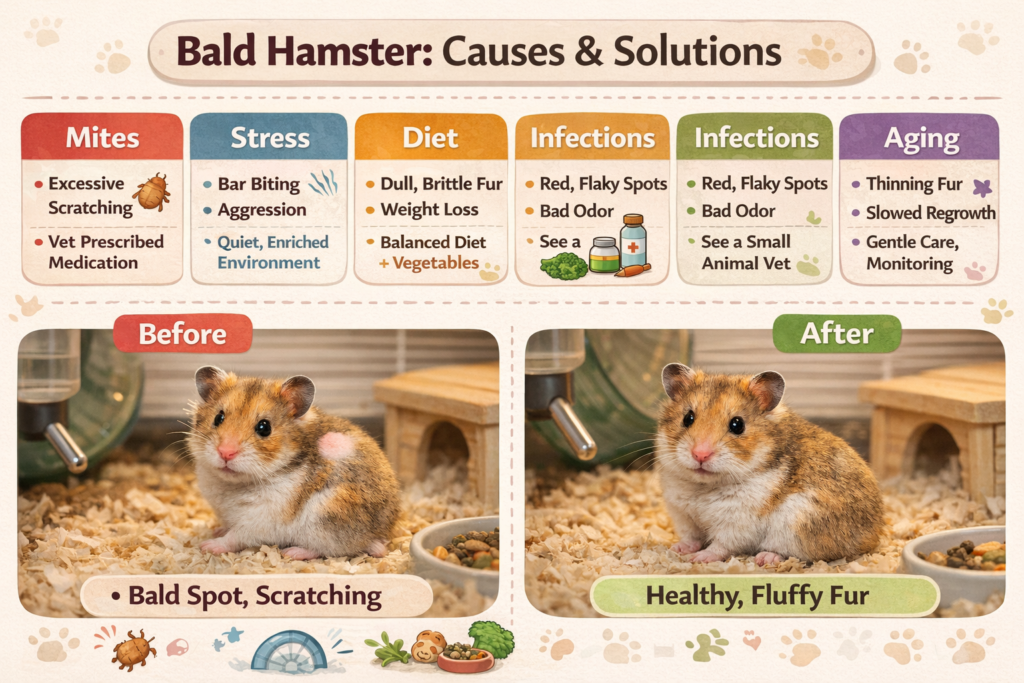
Hair loss in hamsters can occur gradually or suddenly, and understanding the pattern helps identify the cause.
- Gradual thinning → often linked to aging or diet
- Patchy hair loss → usually parasites, infections, or allergies
- Sudden severe baldness → could indicate stress or illness
Let’s break down each cause in detail.
1. Natural Aging
As hamsters age, their bodies undergo changes similar to humans. Fur may become thinner, less shiny, and patchy in certain areas.
What’s normal:
- Mild thinning on the back or hips
- Slower fur regrowth
- Slight dullness in coat texture
What’s NOT normal:
- Large bald patches
- Red or irritated skin
- Sudden hair loss
Senior hamsters also become more sensitive to stress and diet changes. Learn more:
https://innovativeposts.com/hamster-life-stages-baby-to-senior/
2. Mites and Parasites
Mites are one of the most common causes of hair loss in hamsters, and they can spread quickly if untreated.
Symptoms:
- Intense scratching or itching
- Bald patches (especially around ears, face, and back)
- Dry, flaky, or scaly skin
Why this happens:
Mites live on the skin and irritate hair follicles, causing fur to fall out.
Treatment:
- Veterinary-prescribed anti-parasitic medication
- Deep cleaning of the cage and accessories
- Replacing bedding
Important: Over-the-counter treatments can be dangerous always consult a vet.
3. Fungal or Bacterial Infections
These infections are often mistaken for mites but require completely different treatment.
Common signs:
- Circular bald patches (ringworm-like)
- Redness or inflammation
- Scabs or crusty skin
Causes:
- Poor hygiene
- Damp or dirty bedding
- Weak immune system
Treatment:
- Antifungal or antibiotic medication
- Improved cage hygiene
- Isolation if you have multiple pets
Some fungal infections can spread to humans, so hygiene is critical.
4. Poor Diet and Nutritional Deficiency
Your hamster’s coat health is directly linked to its diet. A poor diet can lead to weak hair follicles and eventual hair loss.
Key nutrients for healthy fur:
- Protein (for hair growth)
- Vitamins (especially A and E)
- Minerals (like zinc)
Signs of dietary issues:
- Dull, brittle fur
- Slow regrowth
- Weight loss or lethargy
👉 Follow a proper feeding plan here:
https://innovativeposts.com/hamster-and-food-feeding-guide/
5. Stress and Environmental Factors
Stress is one of the most underestimated causes of hair loss in hamsters.
Common stress triggers:
- Loud noises or constant disturbance
- Small or overcrowded cages
- Lack of toys or stimulation
- Frequent handling
Behavioral signs:
- Bar biting
- Aggression
- Restlessness
👉 Related behavior guide:
https://innovativeposts.com/why-is-my-hamster-biting-the-cage-bars/
Why stress causes hair loss:
Chronic stress disrupts hormone levels, which can weaken hair follicles and lead to shedding.
6. Allergies and Bedding Issues
Certain bedding materials can irritate your hamster’s skin, especially scented or dusty types.
Signs of bedding-related hair loss:
- Bald spots on belly or sides
- Sneezing or respiratory irritation
- Red or itchy skin
Solution:
- Switch to unscented, dust-free bedding
- Avoid cedar or pine wood shavings
Learn how to choose safe bedding:
https://innovativeposts.com/hamster-bedding-guide/
7. Hormonal Imbalances
Hormonal issues are less common but can occur, especially in older hamsters.
Signs:
- Symmetrical hair loss (same on both sides)
- Thin skin
- Reduced activity
These cases often require professional diagnosis and long-term management.
How to Treat a Bald Hamster
Effective treatment depends on identifying the correct cause. However, these general steps will help improve your hamster’s condition:
Improve Diet
- Use high-quality commercial hamster food
- Add fresh vegetables in moderation
- Avoid sugary or processed treats
Maintain Proper Hygiene
- Clean cage weekly
- Replace bedding regularly
- Disinfect toys and accessories
Provide Enrichment
- Exercise wheel
- Chew toys
- Tunnels and hiding spots
👉 See enrichment ideas:
https://innovativeposts.com/hamster-toys-chew-wheel-diy/
Reduce Stress
- Keep cage in a quiet area
- Limit handling during the day
- Follow a consistent routine
Seek Veterinary Care
If symptoms persist or worsen, consult a vet immediately. Early diagnosis can prevent serious complications.
When Should You Worry?
Not all hair loss is dangerous—but some signs require urgent attention.
Warning signs:
- Rapid or spreading bald patches
- Bleeding, sores, or infection
- Severe itching or constant scratching
- Loss of appetite or weight
- Lethargy or unusual behavior
Learn more about serious conditions:
https://innovativeposts.com/hamster-diseases-guide/
How to Prevent Hair Loss in Hamsters
Prevention is the best long-term strategy.
Key tips:
- Provide a balanced diet
- Keep the cage clean and dry
- Use safe bedding
- Reduce stress triggers
- Monitor your hamster weekly
Tracking weight and health can help detect early problems:
https://innovativeposts.com/hamster-weight-chart-by-breed-and-age/
Why is my hamster getting bald patches? What’s causing fur loss?
FAQs
1. Is it normal for a hamster to lose hair?
2. Can hamster hair grow back?
3. Can stress alone cause a bald hamster?
4. Why is my hamster going bald?
5. What are end of life signs in hamsters?
6. Are there bald hamsters?
7. What antibiotics are used to treat hamsters?
8. What is the lifespan of a bald hamster?
9. Will my hamster’s hair grow back?
10. What age do hamsters get bald?
Conclusion
A bald hamster may seem alarming, but it’s often treatable once you identify the cause. Whether it’s aging, diet, stress, or infection, early action makes a huge difference.
By maintaining proper care, hygiene, and nutrition, you can keep your hamster healthy and prevent future issues.
👉 For complete hamster care guidance, visit:
https://innovativeposts.com/how-to-take-care-of-a-hamster/