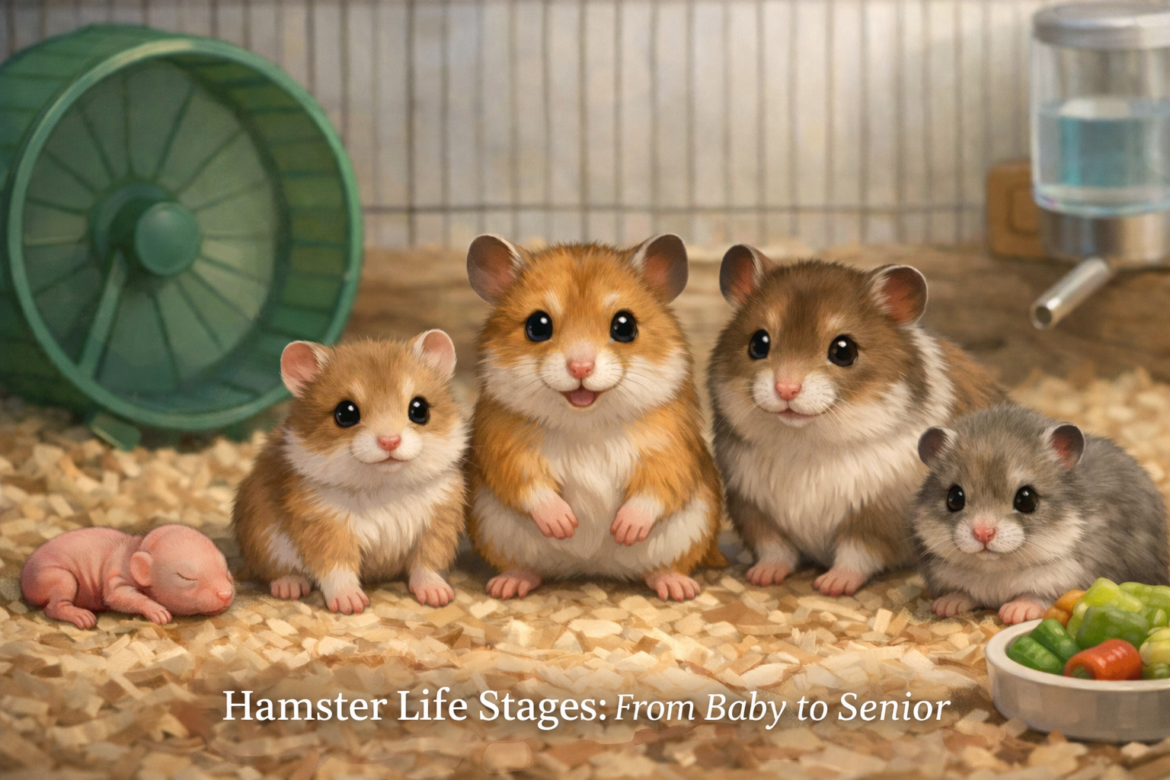
Hamsters grow fast, and their care needs shift dramatically at every stage. From tiny, hairless newborns to wise seniors, each phase brings unique challenges and opportunities for bonding. Understanding these life stages helps you provide the right diet, environment, and handling to keep your hamster healthy and happy.
In this guide, we will break down every stage of a hamster’s life, showing how their behavior, nutrition, and care requirements evolve from birth to old age.
For a complete foundation on housing, feeding, and everyday care, check out complete guide: How to Take Care of a Hamster: Complete Beginner’s Guide
Overview: Hamster Life Stages at a Glance
Most pet hamsters live 2 to 3 years, depending on breed, genetics, and care. Their life can be divided into five main stages:
- Newborn (0–2 weeks)
- Baby / Weaning Stage (2–4 weeks)
- Juvenile (1–3 months)
- Adult (3–18 months)
- Senior (18 months+)
Each stage comes with unique physical and behavioral changes.

Stage 1: Newborn Hamsters (0–2 Weeks)
What Happens During This Stage
Newborn hamsters are:
- Hairless
- Blind and deaf
- Completely dependent on their mother
They rely on warmth, milk, and protection from the nest. At this stage, human interaction should be avoided unless absolutely necessary.
Important Care Notes
- Never touch newborn hamsters unless the mother abandons them
- Avoid cage cleaning during the first 7–10 days
- Keep the environment quiet and stress-free
Stress during this stage can lead to cannibalism or neglect by the mother.
⚠️ Critical Mistake to Avoid:
Many beginners try to “check” babies too often. This does more harm than good.
Stage 2: Baby / Weaning Stage (2–4 Weeks)
Physical Development
At around two weeks:
- Fur begins to grow
- Eyes open
- Teeth develop
- Babies start exploring the cage
By week three, they begin eating solid food alongside nursing.
Behavioral Changes
- Increased curiosity
- Early social interaction with siblings
- Short bursts of activity
Care Tips
- Introduce soft solid foods (grains, seeds, small vegetables)
- Ensure easy access to shallow water sources
- Keep cage setup simple to avoid injuries
This is when hamsters start forming early behavioral patterns, which later affect handling and bonding.
Stage 3: Juvenile Hamsters (1–3 Months)
This is one of the most important life stages.
What Changes
- Rapid growth
- High energy levels
- Personality begins to emerge
Juvenile hamsters are curious but easily frightened. This is the ideal time to begin bonding and gentle handling.
Socialization and Handling
Short, consistent handling sessions help prevent fear-based behaviors later in life. Poor handling during this stage often leads to issues such as biting.
If you’re struggling with aggression, this guide explains the causes and fixes:
👉 Hamster Biting: Causes, Prevention, and Fixes
https://innovativeposts.com/hamster-biting-causes-prevention-fixes/
Housing Needs
- Larger cage space becomes essential
- Proper bedding depth for burrowing
- Safe exercise wheels to release energy
A cramped cage at this stage often causes stress and behavioral problems.
Stage 4: Adult Hamsters (3–18 Months)
This is the longest and most stable stage of a hamster’s life.
Adult Behavior
- Fully developed personality
- Established routines
- Reduced hyperactivity compared to juveniles
Adult hamsters are typically more predictable. Some become calm and tolerant of handling, while others remain independent.
Diet and Nutrition
Adults require a balanced diet, not excessive treats. Overfeeding during this stage leads to obesity, which shortens lifespan.
For a full breakdown of safe and unsafe foods, see:
👉 Hamster and Food: Feeding Guide With Safe & Unsafe Food
https://innovativeposts.com/hamster-and-food-feeding-guide/
Exercise Requirements
- Daily access to a proper wheel
- Optional supervised free-roam or playpen time
A lack of exercise during adulthood is one of the most common causes of health decline.
Stage 5: Senior Hamsters (18 Months and Older)
Senior hamsters need special attention. Aging signs often appear subtly at first.
Common Signs of Aging
- Slower movement
- Weight loss or gain
- Thinning fur
- Reduced appetite
- Sleeping more than usual
This doesn’t mean your hamster is suffering—but it does mean care must be adjusted.
Senior Care Adjustments
- Lower wheel height or remove if mobility declines
- Softer bedding for joint comfort
- Easier access to food and water
- Reduced handling time
Health monitoring becomes crucial at this stage. Age-related illnesses are common.
For warning signs and conditions to watch for, read:
👉 Hamster Diseases: What Every Pet Owner Should Know
https://innovativeposts.com/hamster-diseases-guide/
How Lifespan Varies by Breed
Not all hamsters age the same way.
Some breeds live longer or age faster due to genetics. If you want exact lifespan comparisons by breed, including data tables and calculators, check this guide:
👉 Hamster Average Lifespan: Average Age, Data Table & Age Calculator
https://innovativeposts.com/hamster-average-lifespan-by-breed/
Understanding breed differences helps set realistic expectations and care plans.
How to Support Your Hamster Through Every Life Stage
Hamsters may live only a few years, but their care needs change significantly throughout their life. By adjusting your approach as they grow, you can prevent stress, health issues, and behavioral problems, ensuring a long and happy life for your pet.
1. Adjust the Environment
Hamsters require an environment tailored to their size, energy levels, and mobility at each stage of life.
Newborns and Babies (0–4 weeks)
- Keep the cage cozy, warm, and secure.
- Use soft, dust-free bedding to prevent respiratory issues.
- Avoid high levels of activity or cage accessories that could injure delicate bodies.
Juveniles (1–3 months)
- Provide a slightly larger cage for exploring and climbing.
- Add safe exercise wheels, tunnels, and chew toys.
- Ensure bedding depth allows for burrowing behavior.
Adults (3–18 months)
- Maintain a clean, stimulating environment.
- Rotate toys or introduce new elements to prevent boredom.
- Ensure the water bottle, food dish, and wheel are easily accessible.
Seniors (18+ months)
- Reduce high climbing areas or steep ramps.
- Use softer bedding for joint comfort.
- Position food and water closer to resting areas to avoid unnecessary strain.
Tip: Regularly inspect the cage for wear or hazards, especially for senior hamsters who may have reduced mobility or sight.
2. Modify Handling Over Time
The way you interact with your hamster should change as they age. Proper handling fosters trust and prevents stress or defensive behaviors.
Juveniles:
- Engage in frequent but short handling sessions (2–5 minutes, several times a day).
- Handle gently, allowing the hamster to explore your hands rather than forcing interaction.
- Focus on building trust early to prevent biting habits.
Adults:
- Aim for consistent, calm sessions once or twice daily.
- Adults enjoy stability avoid sudden movements or changes in routine.
- Use handling time to monitor health, such as weight, fur condition, and activity levels.
Seniors:
- Limit handling to gentle, brief interactions.
- Avoid lifting from high distances; support their body fully when picking up.
- Respect their slower pace and reduced energy levels, giving them time to rest between sessions.
Tip: Always monitor body language—flattened ears, squeaking, or freezing can indicate stress.
3. Observe Behavior Changes
Behavioral changes can be early warning signs of health or environmental issues. Don’t assume a sudden shift in activity or mood is “bad temperament.”
Key Observations:
- Reduced activity or lethargy may indicate illness, pain, or aging.
- Excessive chewing or gnawing can signal stress, boredom, or dental issues.
- Aggression or biting often comes from fear, poor handling, or environmental stressors.
- Changes in eating or drinking habits are red flags for metabolic or dental problems.
Action Steps:
- Compare behavior with baseline activity for that hamster.
- Check cage conditions (cleanliness, temperature, bedding).
- Consult a vet if unusual behaviors persist, especially in senior hamsters.
Tip: Keeping a short behavior and health log can help you detect subtle changes early and respond proactively.
Common Mistakes Owners Make at Different Life Stages
Even the most well-intentioned hamster owners can unknowingly make mistakes that affect their pet’s health, behavior, and lifespan. Understanding the risks associated with each life stage helps you avoid pitfalls and provide optimal care.
1. Handling Babies Too Early
The Mistake: Picking up newborn or very young hamsters before they are ready.
Why It’s a Problem:
- Newborns (0–2 weeks) are hairless, blind, and completely dependent on their mother.
- Early handling can cause stress to the babies and mother, sometimes leading to neglect or even injury.
How to Avoid It:
- Wait until the baby is at least 3 weeks old before attempting gentle interaction.
- Focus on observing rather than touching during the first weeks.
- Offer treats near the nest to start building positive associations gradually.
2. Skipping Bonding During the Juvenile Stage
The Mistake: Ignoring socialization and handling during the 1–3 month juvenile phase.
Why It’s a Problem:
- Juvenile hamsters are at a critical stage for developing trust and comfort with humans.
- Skipping bonding can lead to fearfulness, aggression, or biting habits that persist into adulthood.
How to Avoid It:
- Conduct short, frequent handling sessions daily.
- Introduce toys and treats to create positive associations.
- Be patient and let your hamster explore your hands at their own pace.
3. Overfeeding Adults
The Mistake: Giving excessive treats or large portions to adult hamsters (3–18 months).
Why It’s a Problem:
- Adult hamsters are prone to obesity if overfed, which can shorten their lifespan and trigger diabetes, heart problems, or joint issues.
How to Avoid It:
- Follow recommended daily portions of hamster food.
- Treats should be occasional and small in size.
- Include fresh vegetables and limited protein as part of a balanced diet.
Tip: Use a hamster food guide for reference, such as our Hamster and Food: Feeding Guide With Safe & Unsafe Food.
4. Ignoring Subtle Aging Signs in Seniors
The Mistake: Overlooking gradual changes in senior hamsters (18+ months).
Why It’s a Problem:
- Seniors often experience slower movement, reduced appetite, and thinning fur.
- Ignoring these changes can result in untreated illnesses or discomfort.
How to Avoid It:
Schedule regular veterinary check-ups for early detection of health issues.
Monitor behavior, weight, and activity daily.
Adjust cage setup: softer bedding, easy access to food and water, and lower ramps.
1. What is the life cycle of a hamster?
Hamsters go through four main stages:
Baby (0–3 weeks): Eyes closed, fully dependent on mother.
Juvenile (3–6 weeks): Learning to eat solid food and exploring.
Adult (6 weeks–2 years): Fully grown and sexually mature.
Senior (2 years+): Activity slows, health declines.
2. How old is 1 year in hamster years?
1 human year is roughly equivalent to 15 hamster months in early life, meaning hamsters age much faster than humans.
3. How old is a 5-year-old hamster?
A 5-year-old hamster would be extremely old, equivalent to 70–75 human years, but most hamsters rarely live this long.
4. How long is 3 years for a hamster?
3 years is considered very old for a hamster, similar to a 50–55-year-old human, and very few reach this age.
5. Can hamsters live for 5 years?
It is extremely rare; the average hamster lifespan is 2–3 years, with the oldest living up to 4 years.
6. How many hours does a hamster sleep?
Hamsters are nocturnal and sleep 12–14 hours a day, mostly during daylight.
7. How long do hamsters live?
Most hamsters live 2–3 years, depending on species, care, and environment.
8. What is the leading cause of death for hamsters?
The main causes include:
Old age and natural decline
Wet tail (bacterial infection)
Tumors or organ failure
9. Does a hamster recognize its owner?
Yes, hamsters can recognize their owner’s voice and scent, but they are not highly social animals.
10. How to calculate animal age?
Animal age can be estimated by comparing species lifespan to human lifespan. For example, hamsters age quickly in the first months of life, roughly 1 human year = 15 hamster months.
Final Thoughts: Why Understanding Life Stages Matters
Hamsters may be small, but their needs are complex and constantly changing. Treating a senior hamster like a baby or a baby like an adult leads to stress, illness, and shortened lifespan.
By understanding each life stage, you:
- Improve your hamster’s health
- Reduce behavioral issues
- Build trust more effectively
- Become a truly responsible owner
If you’re new to hamster ownership or want a complete care framework, revisit the pillar guide here:
👉 https://innovativeposts.com/how-to-take-care-of-a-hamster/