Winter White Hamster:
The Ultimate Care Guide Every Owner Needs
If you’ve just brought home a Winter White hamster — or you’re seriously thinking about it — you’re in the right place. These tiny, snow-white fluffballs are one of the most misunderstood hamster breeds out there. Most articles give you a 300-word overview and call it done. This guide won’t.
Before diving in, make sure you’ve read our complete hamster care guide — it covers the fundamentals every hamster owner needs. Now let’s get into everything specific to Winter Whites.
🐾 What Is a Winter White Hamster?
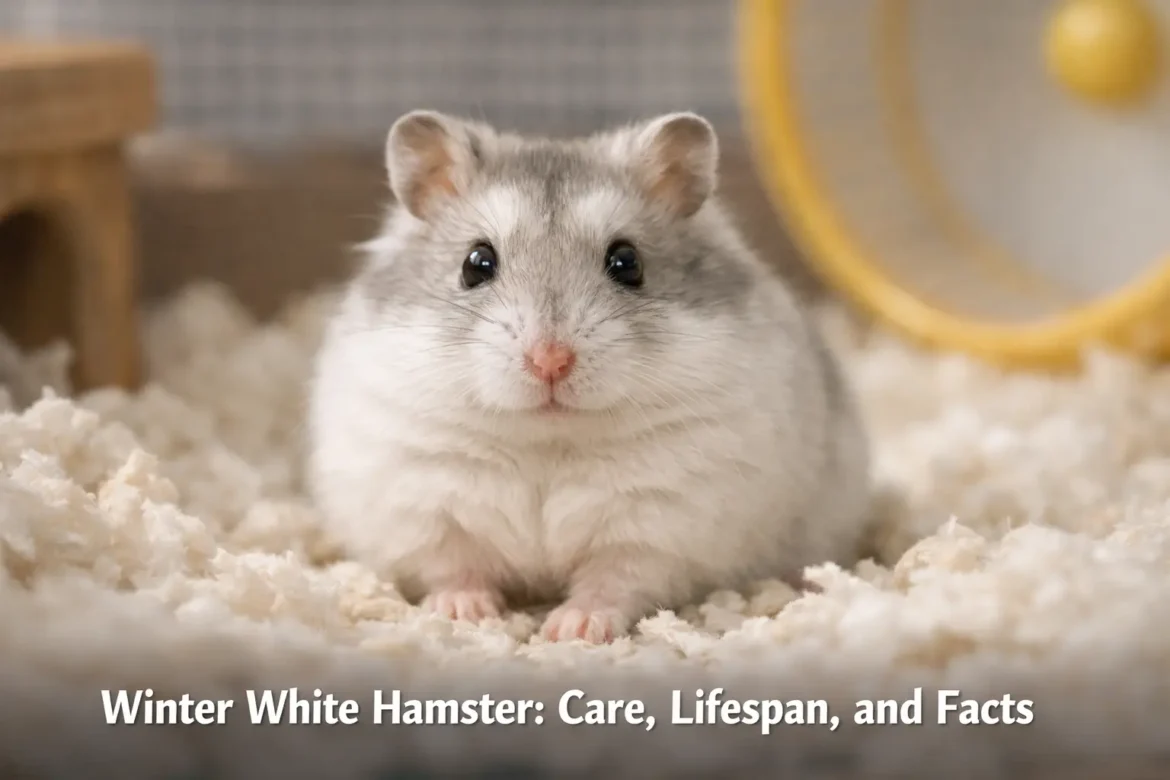
The Winter White hamster (Phodopus sungorus) — also called the Djungarian hamster, Siberian hamster, or Russian dwarf hamster — is native to the steppes of Kazakhstan and Siberia. These little guys evolved to survive harsh, freezing winters, which is exactly why they have such a fascinating ability to change coat color.
They’re often confused with Campbell’s dwarf hamsters because they look nearly identical. This matters a lot when buying — many pet stores sell hybrids of the two species without realizing it. We’ll help you tell them apart below.
Origin
Siberia, Kazakhstan, Central Asia — cold steppe regions
Size
3–4 inches long, 1–2 oz. One of the smallest hamster breeds
Lifespan
1.5–3 years in captivity. Proper care pushes toward the higher end
Activity
Crepuscular — most active at dawn and dusk, not strictly nocturnal
Social
Can live in same-sex pairs if introduced young. Monitor closely
Energy
Very active! Run 5+ miles a night. Wheel is non-negotiable
🎨 Appearance, Colors & the Color Change Mystery
This is where things get genuinely fascinating. Winter Whites are the only pet hamster that can change coat color based on light exposure — a biological process called seasonal color polymorphism.
The White Coat — Why It Usually Doesn’t Happen at Home
In the wild, as daylight decreases in autumn, melatonin levels rise and trigger a gradual shift from grey/brown to white camouflage. But in your home with artificial lights on for 12+ hours a day, your hamster’s brain never gets the signal to turn white. Most pet Winter Whites stay grey-brown year-round — and that’s completely normal and healthy.
Common Natural Color Variations
| Color Morph | Base Coat | Dorsal Stripe | Notes |
|---|---|---|---|
| Wild Type | Grey-brown | Dark grey stripe | Most common, original coloring |
| Sapphire | Blue-grey | Dark grey | Striking, increasingly popular |
| Pearl | White with grey | Faint or absent | Often mistaken for full white |
| Marbled | White + grey patches | Variable | Unique pattern per hamster |
Winter White vs. Campbell’s — How to Tell Them Apart
Winter White
- ✓ Arched back profile
- ✓ Furry feet (adapted to snow)
- ✓ Rounder, more compact face
- ✓ Can turn white seasonally
- ✓ Slightly smaller
Campbell’s Dwarf
- × Flatter back profile
- × Bare feet
- × More pointed nose
- × Never turns white
- × Wider color variety
💛 Personality & Temperament
Winter Whites have a reputation for being gentler and easier to tame than Campbell’s dwarfs — and for the most part, that reputation is earned. They’re curious, energetic little creatures that can become genuinely affectionate with consistent, patient handling.
That said, every hamster has its own personality. Some are bold and run onto your hand immediately. Others need weeks of slow trust-building. Understanding their hamster body language makes a huge difference in how quickly you bond.
Personality Traits at a Glance
- Generally curious and exploratory — love investigating new things
- Less prone to unprovoked biting than some other dwarf breeds
- Can be skittish at first — sudden movements startle them easily
- Often more active during dawn/dusk (crepuscular) than midnight
- Females can be more territorial than males
- Enjoy burrowing and digging — deep bedding is essential
One thing that surprises new owners: Winter Whites sometimes freeze completely when scared — this isn’t hibernation or illness, it’s just a stress response. If your hamster does this often, read our guide on taming your hamster to help build confidence.
🏠 Habitat & Cage Setup
Here’s where most Winter White owners go wrong: buying a cage that’s too small. The pet industry has historically sold tiny cages as “dwarf hamster appropriate” — they’re not. Small doesn’t mean less space needed. These animals run miles every night.
Minimum Cage Requirements
| Requirement | Minimum | Recommended |
|---|---|---|
| Floor space | 360 sq inches | 600+ sq inches |
| Bedding depth | 6 inches | 10–12 inches |
| Wheel diameter | 8 inches | 10 inches (solid, silent) |
| Hide/burrow | 1 hide | 2–3 hides + tunnel |
| Water source | Water bottle | Bottle + backup bowl |
Wire mesh flooring causes bumblefoot — always use solid bottoms. Avoid cedar or pine shavings (toxic). Never place the cage in direct sunlight or near heating/cooling vents. Bar spacing must be under ½ inch — Winter Whites are escape artists and can squeeze through surprisingly tiny gaps.
Best Bedding Options
For a full breakdown of safe vs. unsafe bedding, see our hamster bedding guide. In short: paper-based bedding (like Carefresh) or hemp/flax bedding are your best options. Aim for at least 6 inches so they can burrow properly — this is critical for their mental health, not just comfort.
🥕 Diet & Feeding Guide
Winter Whites have one critical dietary vulnerability that other hamsters don’t: they’re prone to diabetes. This isn’t a rare condition — it’s common enough that their diet needs to be genuinely low in sugar. Many fruits and commercial “hamster treats” marketed as healthy are actually dangerous for this breed.
Daily Diet Breakdown
- High-quality seed mix or lab blocks — 1–2 teaspoons per day
- Small amount of fresh vegetables (cucumber, broccoli, spinach)
- Occasional protein: mealworm, plain boiled egg, plain chicken
- Fresh water available 24/7
Foods to Absolutely Avoid
Never feed: grapes, raisins, citrus fruits, onions, garlic, raw potato, almonds, chocolate, candy, sugary treats. Due to their diabetes risk, even high-sugar “safe” fruits like mango and banana should be extremely limited or avoided entirely.
For a comprehensive list of what’s safe and what isn’t, check out our hamster food safety series where we cover 50+ foods in detail.
❤️ Health, Lifespan & Common Issues
Winter Whites live 1.5–3 years on average. With excellent care — proper diet, enrichment, and a stress-free environment — many reach 2.5 to 3 years. Genetics play a role too, which is why buying from a reputable breeder matters more than people realize.
Most Common Health Problems
Diabetes
Genetic predisposition. Signs: excessive thirst, frequent urination, weight loss. Prevent with low-sugar diet.
Torpor vs. Hibernation
If temp drops below 65°F, they enter torpor — looks like death. Warm slowly. This is not true hibernation.
Overgrown Teeth
Provide wooden chews. Signs: drooling, trouble eating, weight loss. Vet trim needed if severe.
Wet Tail
Rare in dwarfs vs. Syrians but can occur. Signs: watery diarrhea, lethargy. Emergency vet required.
Know the signs your hamster may be seriously ill — catching issues early can add months to their life. Regular weekly health checks at home are the best prevention.
🤝 Taming & Handling Your Winter White
New hamster won’t come near you? Normal. Winter Whites need time to learn you’re not a predator. The key is patience, consistency, and letting the hamster set the pace — never forcing interaction.
Week-by-Week Taming Plan
| Week | Goal | How |
|---|---|---|
| Week 1 | Get used to your presence | Sit near cage, talk softly, no touching |
| Week 2 | Accept your scent | Place used tissue in cage, offer treats through bars |
| Week 3 | Eat from your hand | Open hand with treat inside cage floor, let them approach |
| Week 4+ | Step up onto hand | Cup both hands, let them climb in voluntarily — never grab |
For a full step-by-step approach including what to do if your hamster bites, see our detailed hamster taming guide. Also worth reading: why hamsters bite and how to stop it — our hamster biting guide covers every scenario.
Signs Your Hamster Is Comfortable With You
- Approaches your hand without hesitation
- Grooms themselves while sitting in your palm
- Falls asleep in your hands (ultimate trust signal!)
- Explores calmly rather than running frantically
- Doesn’t freeze or puff up when you approach