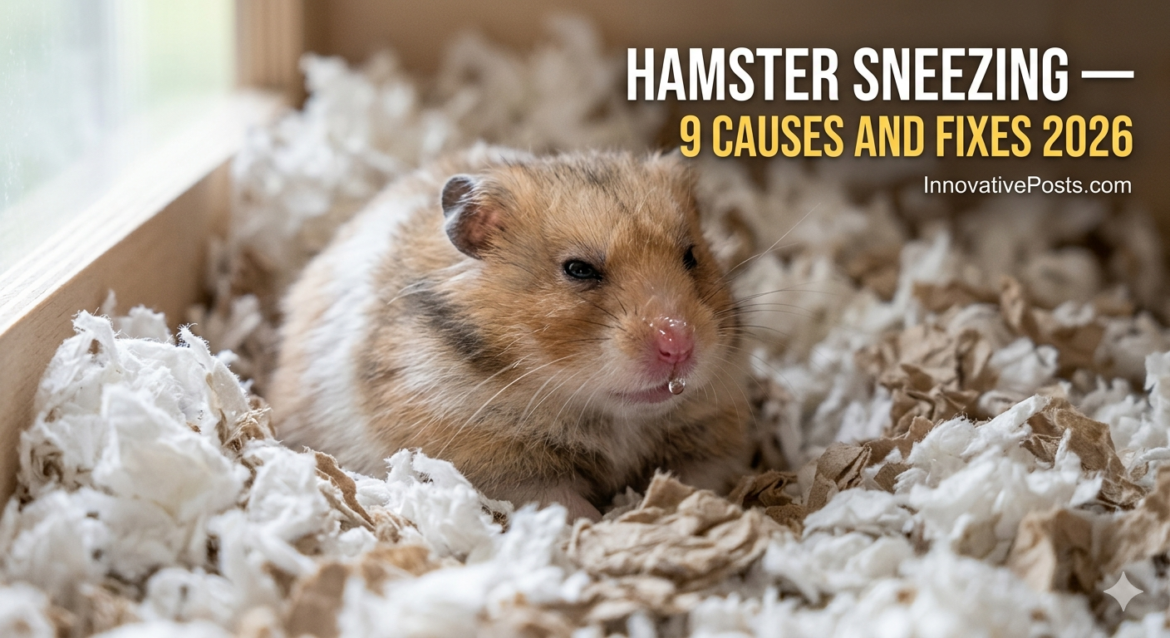
Before we look at causes, it helps to understand why hamsters are so uniquely vulnerable to respiratory problems in the first place.
Why Hamster Respiratory Systems Are So Sensitive
Hamsters have a respiratory rate of approximately 40–110 breaths per minute — significantly faster than humans. Their airways are proportionally narrow, their lung capacity is small relative to their metabolic demands, and their immune systems, while functional, are easily overwhelmed by environmental stressors like poor air quality, cold drafts, and chronic stress.
According to PetMD’s March 2026 veterinary report on hamster sneezing, hamsters sneeze to clear irritants from their nasal passages — the same fundamental mechanism as in humans. Because hamster nasal passages are so narrow, even a small amount of debris, dust, or mucus triggers a much stronger reflex response than in a larger animal. This means sneezing in hamsters is a highly sensitive early warning signal that often appears before any other symptom of illness.
- Hamsters breathe 40–110 times per minute — their airways respond rapidly to any irritant
- Djungarian dwarf hamsters are more prone to respiratory infections than Syrians, according to exotic vet reports
- Syrian hamsters are more susceptible to cardiac disease causing secondary respiratory distress — laboured breathing in Syrians needs careful cardiac assessment
- Hamsters can contract human cold viruses — research published in 2025 confirmed Syrian hamsters are a susceptible host for respiratory syncytial virus (RSV)
- Untreated upper respiratory infections can progress to pneumonia within 3–5 days in weakened hamsters
Normal Sneezing vs Concerning Sneezing
The single most important distinction in hamster sneezing is frequency and context. A single sneeze when your hamster digs into fresh bedding is entirely different from a hamster that sneezes repeatedly throughout its active period, particularly when accompanied by other symptoms.
Normal — No Action Needed
- 1–3 sneezes during a bedding change
- Brief sneezing when digging into deep substrate
- Single sneeze after sniffing a new object
- Sneezing stops within a minute or two
- No discharge, no watery eyes
- Eating, drinking, and activity normal
- Coat clean, smooth, and full
- Breathing is silent and effortless
Concerning — Take Action
- Sneezing repeatedly — 10+ times per active period
- Sneezing persisting more than 24–48 hours
- Any nasal discharge — clear, white, yellow, or green
- Sneezing alongside watery or crusty eyes
- Reduced appetite or not eating at all
- Lethargy during normally active hours
- Audible breathing — clicking, rattling, or wheezing
- Hunched posture or puffed-up fur
If your hamster’s sneezing falls in the right column, work through this guide systematically — starting with the most common and easily fixed causes before escalating to a vet visit.
9 Causes of Hamster Sneezing — From Harmless to Serious
These nine causes account for the vast majority of hamster sneezing cases. They are ordered from most common and most easily resolved to least common and most serious.
Dusty or Irritating Bedding
No Vet NeededThis is by far the most common cause of hamster sneezing — and the most easily fixed. Cedar shavings, pine shavings, and some lower-quality paper beddings release fine dust particles, aromatic oils (phenols in cedar and pine), or synthetic scent compounds that directly irritate a hamster’s nasal passages every time it digs or burrows.
Cedar and pine shavings are the worst offenders. Their phenol content not only causes sneezing but triggers chronic respiratory irritation, skin rashes, and immune suppression with prolonged exposure. Even some dust-extracted wood shavings retain enough fine particles to cause consistent sneezing in sensitive hamsters. Scented bedding — artificially fragranced paper or wood — is another frequent trigger that many owners do not consider.
Airborne Household Irritants
No Vet NeededHamsters have up to 1,000 times more scent receptors than humans. What barely registers as a scent to you can be an overwhelming respiratory irritant to your hamster. Common household triggers include aerosol sprays (hairspray, air fresheners, cleaning sprays, deodorant), cigarette or vape smoke, scented candles, plug-in diffusers, essential oil diffusers, perfume, and even strongly scented cooking vapours.
Many owners do not connect their hamster’s sneezing to these airborne triggers because the exposure happens briefly and at a distance from the cage. Airborne particles from a spray used across the room can settle into bedding and continue causing irritation for hours after the original application.
Food Particles and Dust
No Vet NeededDried food mixes, seed mixes, and even high-quality pellets can produce fine dust when your hamster digs through them. This is particularly common with scatter feeding — the recommended method — because the hamster buries its nose deep into bedding to forage, inhaling both bedding particles and food dust simultaneously. Some hamsters also sneeze in response to specific foods with strong odours, such as dried herbs, certain vegetables, or strongly scented treats.
This type of sneezing is always brief — 2 to 3 sneezes during or immediately after eating or foraging — and never accompanied by discharge or other symptoms.
Allergic Reaction
Monitor CloselyTrue allergies in hamsters — where the immune system overreacts to a specific substance — are less common than simple irritation but do occur. Allergic sneezing is characterised by consistency: it happens reliably every time the hamster is exposed to the specific allergen. Common allergens include certain wood types used in hideouts or tunnels, specific food ingredients, new nesting materials, and chemical residues on cage accessories that were not rinsed thoroughly after cleaning.
The challenge with diagnosing allergies is the need for systematic elimination. Change one variable at a time and wait 48–72 hours between changes to identify the culprit. Never change bedding, food, and accessories simultaneously — you will not know which change resolved the problem.
Cold Drafts and Temperature Fluctuations
Monitor CloselyA cage placed near a window, air conditioning vent, external wall, or in a room that drops in temperature at night is at constant risk of draft exposure. Cold air does not directly cause bacterial infection — but it rapidly weakens the respiratory tract’s mucosal defences, making your hamster significantly more susceptible to any pathogen already present in the environment.
Draft-induced sneezing is often intermittent and seasonal — worse in winter or when air conditioning runs heavily. If your hamster sneezes more at specific times of day, particularly night or early morning when temperatures drop, cage placement is the likely culprit. The ideal cage temperature range is 65–75°F (18–24°C) with no sudden fluctuations.
Foreign Object in the Nasal Passage
See Vet if PersistentSmall food particles, bedding fibres, seed husks, or tiny pieces of dried plant material can occasionally lodge in a hamster’s nasal passage. This causes sudden, intense, repetitive sneezing — often a rapid burst of 5 to 10 sneezes in quick succession — as the hamster attempts to expel the obstruction. Unlike infection-related sneezing, foreign object sneezing typically has a very sudden onset and then stops as abruptly as it started once the object is dislodged.
If the sneezing burst resolves completely within 5 to 10 minutes and your hamster returns to normal activity, the object was likely expelled. If sneezing continues persistently for more than 20 to 30 minutes, or shows any signs of breathing difficulty, a vet visit is needed to safely remove it.
Upper Respiratory Infection
Vet Within 24 HoursUpper respiratory infections are the most serious common cause of hamster sneezing and require prompt veterinary attention. As confirmed by PetMD’s 2026 veterinary guidance, hamsters do not resolve respiratory infections the way humans might recover from a common cold — their immune systems are not equipped to clear bacterial URIs without antibiotic treatment, and the infection can progress to pneumonia within days.
URIs in hamsters are caused by bacteria — including Streptococcus species, which children can pass to pet hamsters — or by viruses. The infection typically begins in the nasal passages and throat, causing sneezing and watery discharge, then progresses to thicker yellow or green mucus, eye involvement, lethargy, and loss of appetite. Djungarian dwarf hamsters appear more frequently affected than Syrians according to exotic vet reports.
Dental Disease Affecting the Nasal Passage
Vet Assessment NeededThis is one of the most frequently overlooked causes of hamster sneezing. The roots of a hamster’s upper incisor teeth sit very close to the nasal passage. When dental disease causes tooth root elongation, abscess formation, or tooth malalignment, the physical pressure or infection from the affected root can directly irritate or penetrate the adjacent nasal tissue — causing persistent sneezing with no obvious respiratory source.
Dental-related sneezing is characterised by its chronicity — it persists despite environmental improvements, does not respond to standard URI treatment, and is often accompanied by difficulty eating, drooling, or weight loss that reveals the dental component. A hamster that is sneezing, losing weight, and eating with difficulty simultaneously needs a full dental examination under sedation.
Pneumonia
Emergency — Same DayPneumonia is the most severe respiratory condition in hamsters and represents a genuine veterinary emergency. It develops when an untreated upper respiratory infection progresses from the nasal passages deep into the lungs. According to veterinary clinical guidance, the condition can develop from an untreated URI within as little as 3 to 5 days in a weakened or stressed hamster.
Pneumonia symptoms are dramatically different from simple sneezing: the hamster’s entire body may visibly move with each laboured breath, the breathing rate becomes visibly rapid, wheezing or crackling sounds are audible, the hamster sits hunched with puffed-up fur, stops eating, and becomes profoundly lethargic. This is a medical emergency — without immediate treatment including antibiotics, anti-inflammatories, and supportive care, pneumonia in hamsters can be fatal within 24 to 48 hours.
Nasal Discharge Colour Guide
The colour and consistency of nasal discharge is one of the most informative indicators of what is happening in your hamster’s respiratory system. Here is what each type tells you:
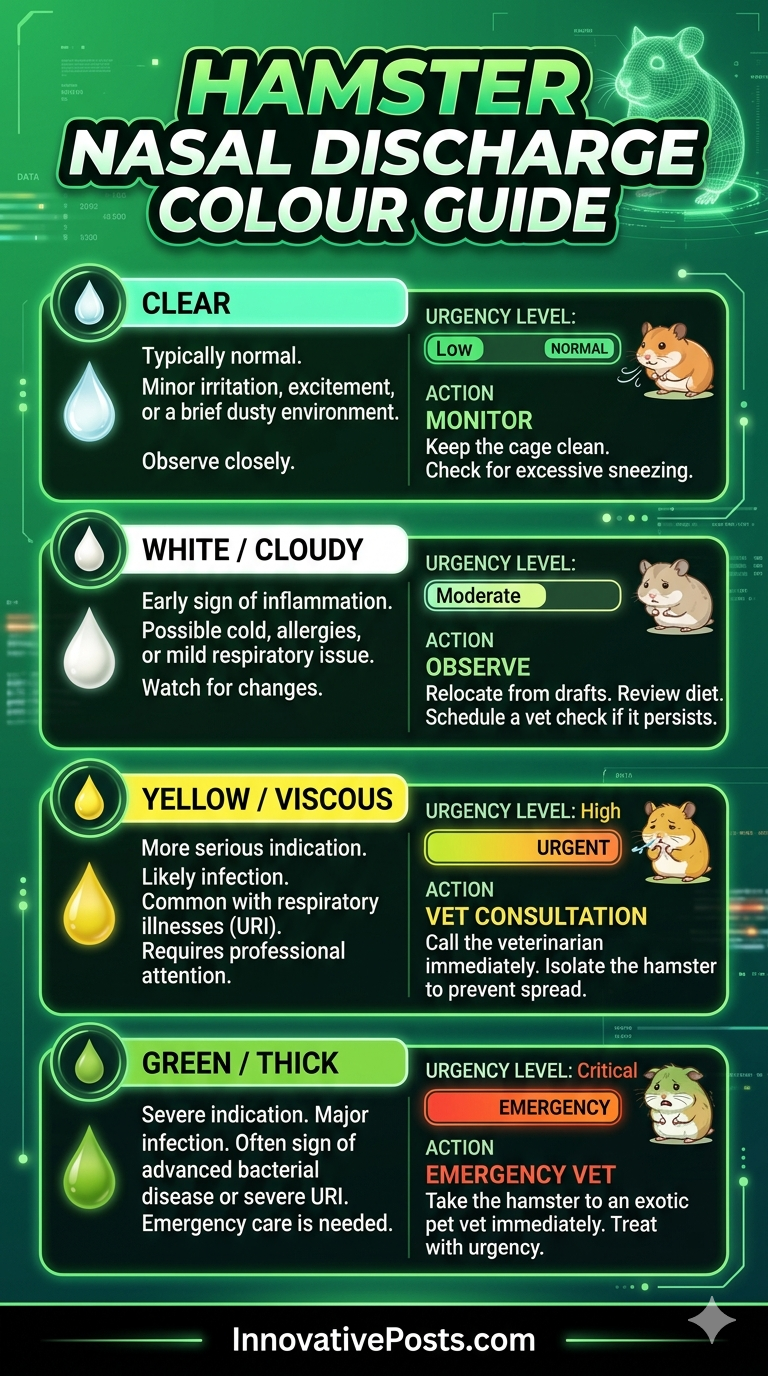
Clear and Watery
Early-stage irritation or beginning of a URI. Monitor closely for 24 hours. If it thickens or increases, see a vet. If it clears with a bedding change, irritation was the cause.
White or Milky
Moderate irritation or early bacterial infection. Change bedding and environment immediately. Vet visit within 24–48 hours if no improvement.
Yellow or Thick
Established bacterial infection — active URI. Requires veterinary attention and antibiotic treatment. See a vet within 24 hours without exception.
Green or Blood-Tinged
Severe bacterial infection or possible pneumonia. Emergency — see an exotic vet the same day. Green discharge means the infection has advanced significantly.
Symptom Combination Table — What to Do Right Now
Use this table to assess your hamster’s exact situation and determine the correct urgency level:
| Sneezing Pattern | Other Symptoms | Most Likely Cause | Action |
|---|---|---|---|
| 1–3 sneezes, stops quickly | None | Bedding dust or new scent | Monitor only |
| Frequent during new bedding | None | Dusty bedding irritation | Switch bedding |
| Persistent, many times per hour | Clear watery discharge | Allergy or early URI | 48hr monitor then vet |
| Persistent, many times per hour | Yellow or green discharge | Bacterial URI | Vet within 24 hours |
| Persistent sneezing | Watery eyes, mild lethargy | URI spreading to eyes | Vet within 24 hours |
| Sneezing with weight loss | Difficulty eating, drooling | Dental disease (tooth root) | Vet assessment needed |
| Any sneezing | Laboured breathing, hunched posture | Pneumonia | Emergency — same day |
Safe Home Care Steps Before the Vet Visit
For cases of environmental irritation or mild early-stage sneezing with no discharge, these home steps can resolve the problem or significantly reduce symptoms while you arrange veterinary care:
- 1Change the bedding immediately. Switch to plain, unscented, dust-free paper bedding. This single step resolves sneezing in the majority of mild cases within 48 hours. Do a full cage clean at the same time to remove dust and irritant particles from the entire environment. See our Cage Cleaning Guide for the correct technique.
- 2Remove all airborne irritants from the room. Stop using air fresheners, scented candles, diffusers, and aerosol products of any kind in the room where the cage is kept. Open windows briefly to ventilate — keeping the cage away from any direct draft — then close and keep the room scent-free.
- 3Check and stabilise room temperature. Confirm the cage location is away from windows, exterior walls, and vents. Use a thermometer to verify the room stays between 65–75°F at all hours including overnight. Add extra nesting material if needed during colder periods.
- 4Provide warm steam humidity cautiously. For a hamster with a mild URI that you are about to take to the vet, placing a bowl of warm (not boiling) water near — not in — the cage for 10 to 15 minutes can temporarily soothe irritated airways. Never place the bowl inside the cage and never allow direct contact with steam or hot water.
- 5Offer soft, accessible food and fresh water. A sneezing hamster may have reduced appetite. Offer soft easy-to-eat foods like small pieces of cooked plain chicken, soft vegetables, or moistened pellets. Dehydration in a sick small animal accelerates decline — ensure clean water is always accessible.
- 6Isolate from other hamsters immediately. If you house any hamsters together — dwarf species — separate the sneezing hamster into a clean quarantine cage immediately. Both bacterial and viral URIs spread rapidly between hamsters. Quarantine until fully treated and symptom-free for 48 hours.
- 7Document and record. Count sneezes per 10-minute observation window during the active period. Note the colour of any discharge. Take a short video of the sneezing and breathing — this is invaluable for the vet to assess breathing pattern and sneezing frequency accurately.
- Human cold medications — Sudafed, antihistamines, nasal sprays — toxic to hamsters
- Children’s cold syrups — contain xylitol and other compounds harmful to small rodents
- Antibiotics prescribed for another pet — dosing, formulation, and drug choice must be species-specific
- Vicks VapoRub or mentholated products near the cage — the vapours cause severe respiratory irritation in hamsters
- Essential oils in any form — even diffused lavender or eucalyptus causes respiratory distress
What the Vet Will Do — Diagnosis and Treatment
An exotic vet experienced with small animals will take a systematic approach to diagnosing the cause of your hamster’s sneezing. Here is what to expect at the appointment:
| Diagnostic Step | What It Checks | When Used |
|---|---|---|
| Physical examination | Breathing rate, nasal discharge colour, lung sounds, body weight, posture | Every appointment — always first |
| Nasal swab or culture | Identifies the specific bacteria — guides antibiotic choice | Persistent or severe URI |
| Chest X-ray | Confirms pneumonia — shows fluid or consolidation in lungs | Suspected pneumonia or laboured breathing |
| Dental examination under sedation | Tooth root elongation, abscess, or malalignment | Sneezing with weight loss or eating difficulty |
| Blood panel | Overall immune status, signs of systemic infection spread | Severe or long-standing cases |
Prescription Medications for Hamster Respiratory Infections
| Medication | Type | Used For |
|---|---|---|
| Enrofloxacin (Baytril) | Oral antibiotic | First-line broad-spectrum URI treatment |
| Trimethoprim-sulfamethoxazole | Oral antibiotic | Alternative broad-spectrum antibiotic |
| Doxycycline | Oral antibiotic | Specific bacterial types including Mycoplasma |
| Meloxicam | Anti-inflammatory and pain relief | Reduces airway inflammation, fever management |
| Oxbow Critical Care | Recovery diet supplement | Nutritional support when appetite is reduced |
Never stop antibiotic treatment early, even if your hamster appears to have fully recovered. Stopping antibiotics before the prescribed course ends causes relapse and antibiotic resistance, making the next infection far harder to treat. A typical course for hamster URI is 7 to 14 days. Continue until the last dose as directed by your vet.
How to Prevent Hamster Sneezing
The majority of hamster sneezing cases — both irritation-based and infection-based — are entirely preventable with the right environment and care routine:
- Use exclusively dust-free, unscented paper bedding — check every bag before use for excessive fine dust settling at the bottom
- Never use cedar or pine shavings — their phenol content causes immediate sneezing and long-term respiratory damage
- Keep the cage away from windows, exterior walls, air vents, and any source of cold drafts
- Maintain room temperature consistently between 65–75°F — use a thermometer to verify, do not rely on feel
- Never use aerosol products, scented candles, diffusers, or strong-scented products in the room where the cage is kept
- Do not handle your hamster when you have a cold, flu, or any respiratory illness — hamsters can contract human respiratory viruses
- Wash hands thoroughly before every interaction with your hamster
- Spot clean the cage every 2–3 days to prevent mould and bacterial buildup from moist bedding
- Feed a nutritionally complete high-quality pellet diet — nutritional deficiencies including low vitamin A impair respiratory mucosal defences. See our Hamster Feeding Guide
- Reduce chronic stress — a stressed hamster has significantly lower immune function. See our Hamster Stress Signs Guide
- Annual exotic vet wellness check — dental disease progresses slowly and is often only detected on professional examination
Frequently Asked Questions (2026)
Final Thoughts: When to Worry and When to Wait
Hamster sneezing sits on a spectrum that runs from completely harmless to genuinely life-threatening — and the distance between one end and the other can be measured in days. The good news is that the difference between the two extremes is usually clear once you know what to look for: frequency, persistence, the presence of discharge, and accompanying symptoms.
A hamster that sneezes twice during a bedding change and then goes back to foraging is fine. A hamster that has been sneezing persistently for two days with yellow discharge and reduced appetite is not — and waiting another two days to see if it improves is not a safe option for an animal this small.
Start with the environment. Change the bedding. Remove the airborne irritants. Stabilise the temperature. If sneezing continues past 48 hours or any discharge appears, that is your signal to call an exotic vet without delay.
Written by Emily Carter | Updated: April 2026 | InnovativePosts.com