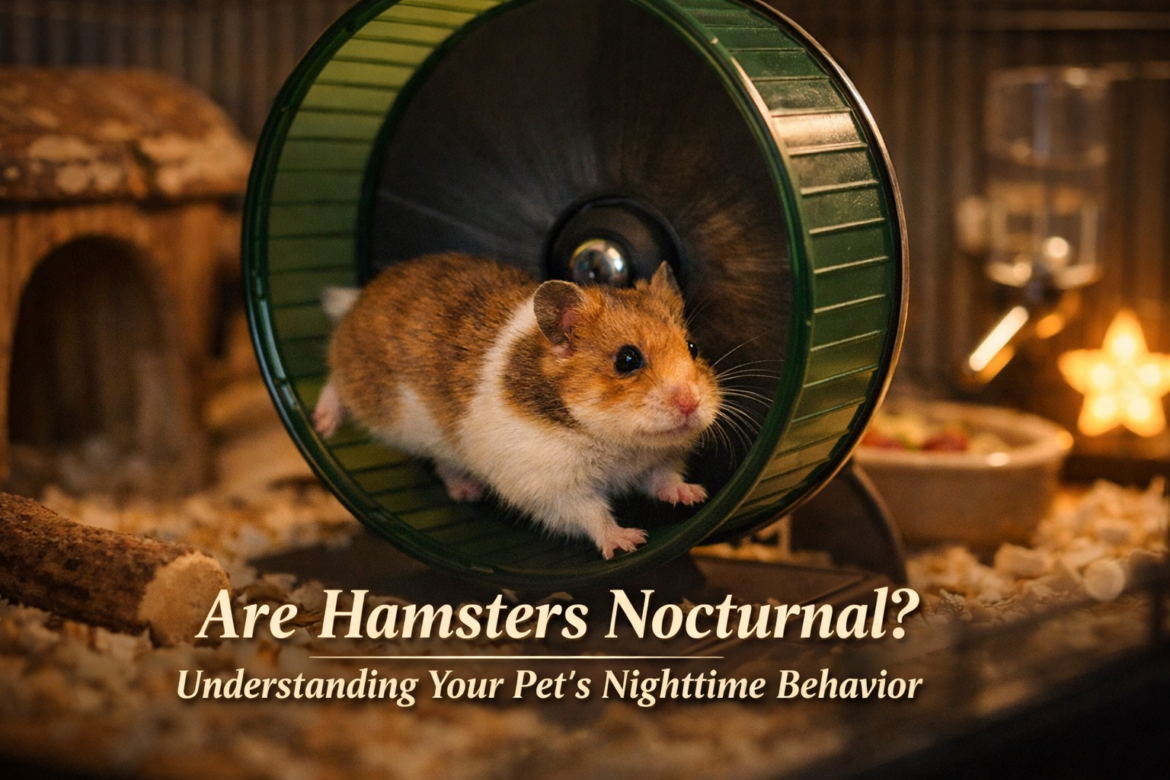
Hamsters are beloved pets, but their activity patterns often confuse new owners. Many people wonder, are hamsters nocturnal animals? Understanding your hamster’s natural sleep and activity cycles is crucial for proper care and creating a happy, healthy environment.
Are Hamsters Nocturnal?
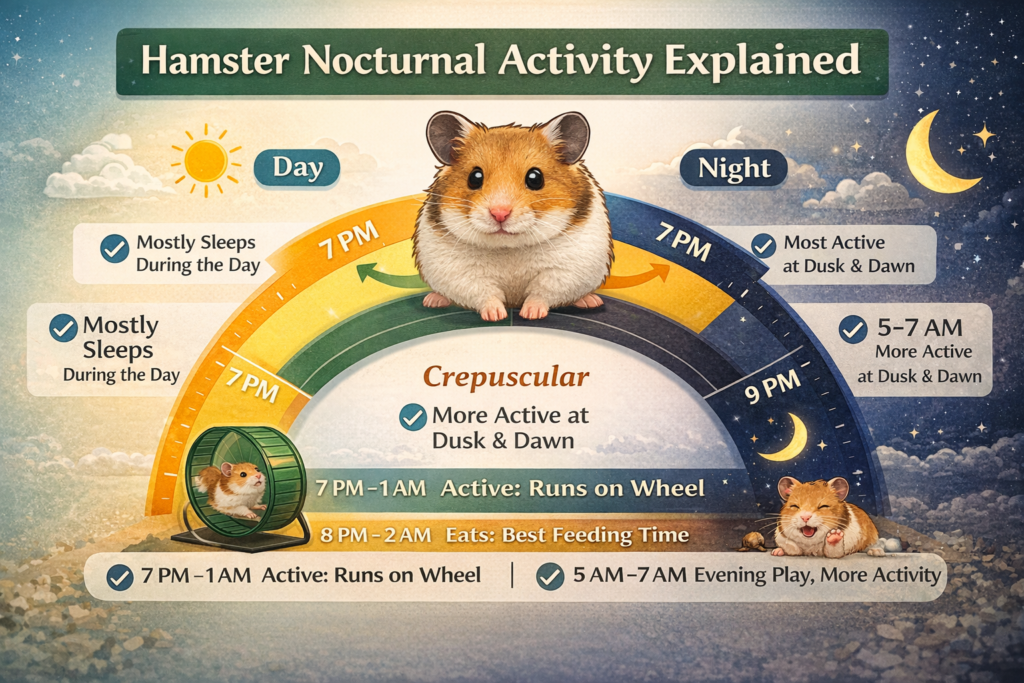
Yes, most hamsters are nocturnal or crepuscular, meaning they are primarily active during the night or in the early morning and evening hours. This behavior is a survival trait inherited from wild hamsters, who avoid predators by staying hidden during the day. Understanding these patterns can help you better plan feeding, cleaning, and playtime without stressing your pet.
Nocturnal vs Crepuscular:
- Nocturnal hamsters are awake mainly at night and may run on their wheel, explore, or forage during these hours.
- Crepuscular hamsters are most active at dawn and dusk, showing short bursts of energy during these transitional periods.
Recognizing your hamster’s activity cycle is also important for monitoring their health and behavior. If you notice unusual daytime activity, it could signal stress or health issues. For more insights into your hamster’s behavior and how to handle it, check out: Why Is My Hamster Biting the Cage Bars? — this article explains behavioral signs and solutions that often overlap with nocturnal activity patterns.
How Activity Patterns Vary by Breed
Different hamster breeds exhibit slightly different activity cycles, which can impact how you interact with and care for your pet. Understanding these patterns can help you provide a better environment and schedule for feeding, play, and rest.
- Syrian Hamsters: These are mostly nocturnal and tend to be more independent. They are active at night but may slightly adjust to your household’s routine if you handle them gently and consistently.
- Dwarf Hamsters (Roborovski, Campbell’s, Winter White): Typically crepuscular, meaning they are most active during dawn and dusk. They are often social, and some may even take short naps during the day. Their bursts of energy may be frequent, so enrichment like exercise wheels and tunnels is essential.
For more on hamster breeds and life stages, check out our guide: Hamster Life Stages: Baby to Senior.
Signs Your Hamster Is Following Its Natural Sleep Cycle
Understanding your hamster’s activity can prevent unnecessary stress:
- Running on the wheel at night
- Burrowing or nesting during the day
- Short bursts of activity in early morning or evening
If your hamster is awake during the day but seems restless or aggressive, see our article: Why Is My Hamster Biting the Cage Bars?.
How to Handle a Nocturnal Hamster
Even if your hamster is active at night, you can interact with it safely:
- Observe before handling: Let your hamster wake up fully.
- Gentle handling: Use slow movements to prevent startling.
- Schedule playtime: Evening or early morning sessions work best.
Learn more about taming and handling in our comprehensive guide: How to Take Care of a Hamster: Complete Beginner’s Guide.
Tips for Adapting to Your Hamster’s Schedule
- Quiet cage placement: Keep the cage away from loud daytime activity.
- Provide enrichment: Wheels, tunnels, and toys keep your hamster entertained during active hours. See our suggestions: 5 Top Hamster Toys for Mental and Physical Stimulation.
- Nighttime feeding: Provide food and fresh water in the evening to match their natural eating times.
Health Considerations Linked to Nocturnal Activity
Nocturnal behavior is normal, but disruptions can signal stress or illness:
- Sudden changes in activity could indicate illness, such as Hamster Wet Tail or other health issues.
- Overactive or lethargic behavior may also relate to diet or age. Track growth with: Hamster Weight Chart by Breed and Age.
FAQs
1. Do all hamsters sleep during the day?
Most hamsters do, but crepuscular breeds may be active in early morning or evening hours.
2. Can I train my hamster to be awake during the day?
Only to a limited extent. Hamsters have natural rhythms that are hard to change without stress.
3. Why is my hamster awake during the day?
This may indicate boredom, hunger, or environmental disturbances. Make sure your hamster has plenty of enrichment and a quiet cage.
Conclusion
Understanding that hamsters are nocturnal animals is key to providing proper care. Observing their natural activity patterns, adjusting your interaction schedule, and providing suitable enrichment ensures a happy, healthy hamster.
For a full guide to all aspects of hamster care, check out our pillar article: How to Take Care of a Hamster: Complete Beginner’s Guide.